Direct answer
Resolve discrepancies before approving the order
Before placing a custom scarf order, turn every conflicting description into a written clarification. Identify the product, record the competing statements, and ask the supplier to confirm one specification and approval sequence for the quoted order. Keep the agreed revision with the quotation and sample record. A product-page title, a checkout selection and a sample photograph can each describe only part of the purchase.
Buyer scenario
The decision behind the brief
A discrepancy does not tell you why the information differs. It may reflect a template field, packaging measurement, old description or different product variant. The purchasing task is to establish what will actually be supplied, what the price covers and which decisions remain open.
Start with the inconsistency you can point to
During our November 2026 review, a custom scarf listing on Faire described size options in inches while its structured dimensions field used centimetres. The text also asked buyers to contact the seller before ordering, while a later process description began with selecting a size and placing an order. These are observable differences in the page, not findings about delivered goods. A buyer would need the seller's clarification before relying on either sequence. Source: Faire product listing.
The useful response is specific: “Please confirm whether this measurement describes the finished scarf or its package, and whether this order requires a personalised quotation before checkout.” That gives the supplier something answerable. A general request to confirm that everything is correct leaves the conflicting detail unresolved.
Save the page or quotation version used for your question. Online fields can change, and a screenshot without the selected variant can create another disagreement. Record the date, product code and option selected alongside the relevant passage.
Separate fibre, construction and appearance
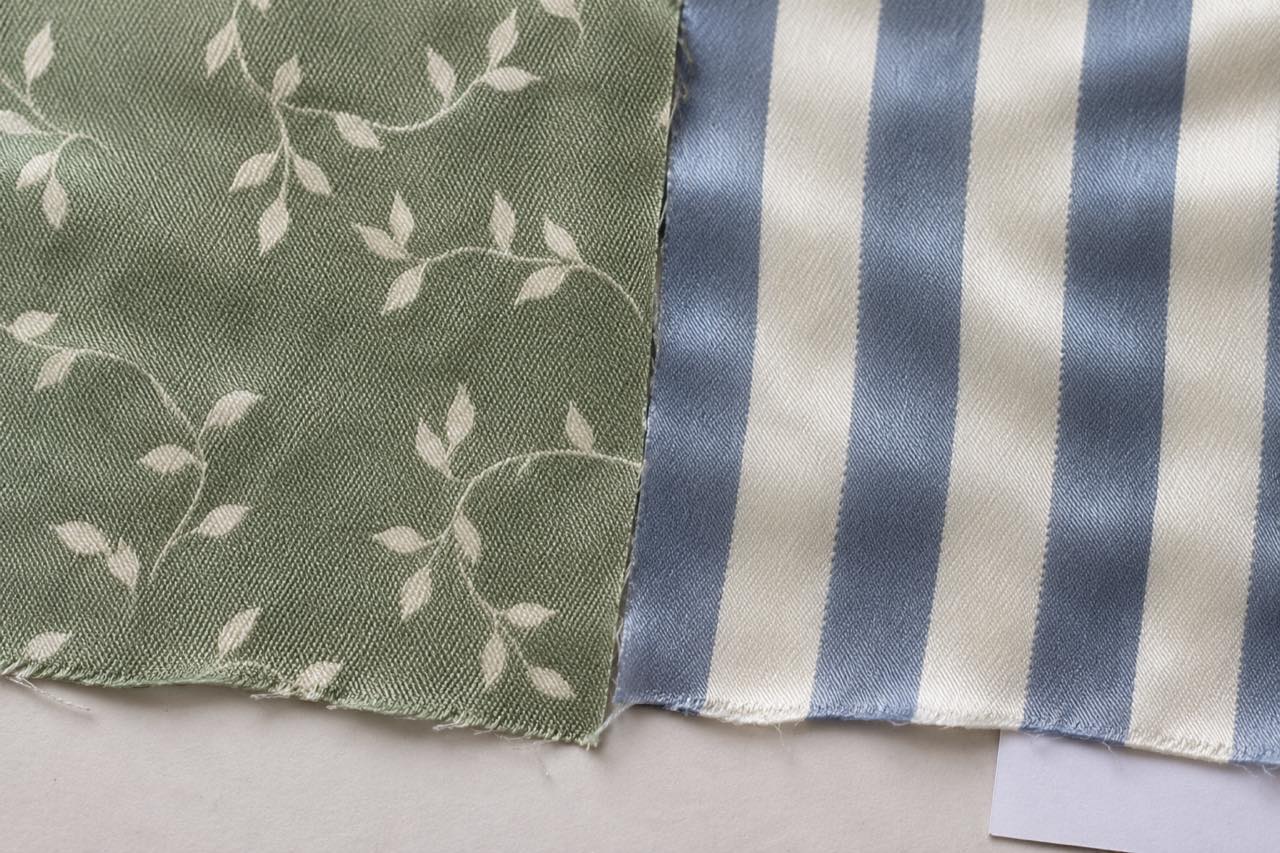
Material descriptions deserve their own review. Silk identifies a fibre; satin describes a fabric construction and surface. A glossy photograph cannot establish fibre content. Ask for the composition, construction and agreed weight reference of the exact item being quoted, including any backing or second layer.
If one message says silk and another says polyester satin, request a revised product description before comparing prices. Do not approve a substitute merely because the two samples look similar in a photograph. The choice can change hand feel, care information, product positioning and the details needed on labels.
Use one material record across the quotation, sample request and production specification. If the sample uses a different fabric because the intended material is unavailable, state what the sample can demonstrate. It may settle layout without approving drape or final colour.
Fix the meaning of every dimension
A size needs a unit and a measurement basis. State whether it refers to the finished scarf, print area, cut panel or packed product. Record how and when the finished item will be measured and ask the supplier to propose a realistic tolerance for that construction.
For a project managed in both inches and centimetres, select one controlling unit and show the converted figure as a reference. Decide how rounding will be treated. A clean conversion is useful arithmetic; it does not establish the supplier's production tolerance.
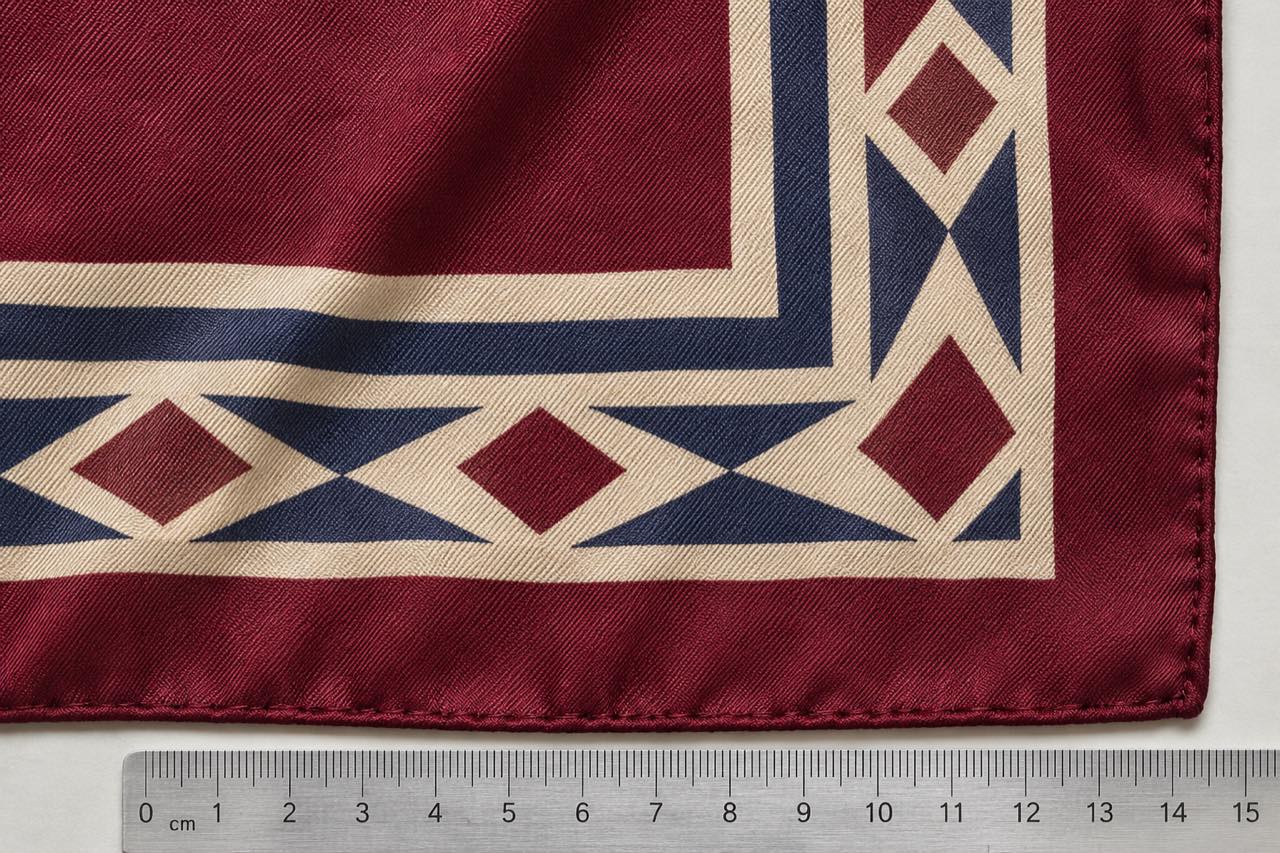
Check the artwork against that same dimension. A border set to a cut-panel outline can move relative to the finished edge after hemming. A sample photograph may show the effect, but the specification still needs a named size and edge allowance. Our finished-size and measurement guide covers that decision in more detail.
Build the quantity around order lines
The total number of scarves is only one quantity. Buyers should also list each artwork, colourway, size and material combination. Ask how the supplier defines a style and how that definition affects the quoted minimum and unit price.
Consider a planning example with one artwork in two sizes. The scarf quantities might be straightforward, but the boxes may require two internal dimensions and the labels may carry different product codes. The order therefore contains separate production and packaging decisions. This example illustrates the structure; it is not a statement of any supplier's minimum.
Show samples, approved bulk units and spare packaging separately. Clarify whether a quote assumes one combined shipment or separate destinations. These questions help explain a price difference without assuming that the cheaper quote excludes work deliberately.
Price the complete packed item
“Gift packaging included” needs a component list. Identify the label, hangtag, story card, pouch or box, tissue, barcode, assembly and shipping carton. Mark each as included, optional, buyer-supplied or not required.
Then ask what remains provisional. A box price may be available before its artwork is approved, while freight still depends on final packed weight and dimensions. Preserve that distinction in the quotation instead of treating an estimated delivered cost as fixed.
Request a packed reference when fit or presentation matters. Approving a box drawing does not establish that the scarf, card and label will sit correctly inside it. The packaging guide can support the component discussion.
Write the approval sequence as a project schedule
Agree what must happen before sampling and bulk production. The sequence may include specification review, artwork approval, payment, a strike-off, a sewn sample, packaging approval and inspection. The steps depend on the project; there is no reason to assume that every order needs every stage.
For each stage, identify the decision maker, the material being reviewed and the next activity it releases. Keep a screen mockup separate from a physical colour approval. If a material change follows artwork approval, ask which decisions need reopening and whether cost or timing changes.
Use actual arrival requirements when planning a launch. A production completion date leaves transport and receiving work outstanding. Ask which event starts a supplier's quoted lead time and what happens when a buyer returns comments late. Our sample approval guide explains how to record the scope of an approval.
Keep one short clarification register
The register below is a suggested purchasing tool, not a representation of an existing SCARFTEX contract form.
| Field | What to record |
|---|---|
| Item and version | Product code, artwork, colourway and document date |
| Conflicting statements | The wording or measurements that do not agree |
| Supplier clarification | The exact specification or process being offered |
| Cost and timing effect | Confirmed change or an item awaiting quotation |
| Buyer decision | Approval, requested revision or unresolved question |
| Supporting reference | Named file, sample, photograph or quotation revision |
Before releasing the next stage, check that the supplier has received the same revision as the buyer. Agree how documents will be reconciled if the quotation, specification and sample conflict. There is no automatic rule in this guide that a sample, email or purchase order always overrides everything else.
At SCARFTEX, the required artwork, specification and sample approvals are agreed for each project. Start with the estimated quantity and intended use, then identify the open decisions in the brief. A proposed confirmation process should remain a proposal until both parties accept it.
Before you send the brief
Review checklist
- Identify the conflicting statement and selected variant.
- Confirm composition, finished dimensions and approval scope.
- Retain the quotation, specification and sample revision together.
Frequently asked questions
Which document controls if the product page and quotation disagree?
Ask the supplier to reconcile them in a revised order document and agree the controlling references. Do not choose a document hierarchy without the other party's confirmation.
Can a photograph approve the finished size?
A photograph can support a review, especially with a visible measurement, but the written record should still identify the size, unit, method and agreed tolerance.
Should I pay before resolving a material discrepancy?
Request clarification and understand the payment terms before making the commitment. If a payment is already made, ask which specifications remain changeable and record the next agreed action.
Does a quoted lead time include shipping?
Confirm the start event, completion event and delivery scope. Production, transit, customs handling and receiving may be separate activities.
What if a confirmed detail changes after sample approval?
Record the change, affected references and potential cost or timing impact. Ask whether a new sample or approval is needed before proceeding.
What should I send for a project review?
Send the intended use, estimated quantities by variant, artwork status and the conflicting descriptions. Share the required-arrival date and packaging expectations so the clarification covers the complete order.
Primary references
Sources used for technical context
These sources support the general technical or regulatory context. They do not prove SCARFTEX capability, certification or the specification of a particular order.
- Faire — Custom scarf listingFaire
Supplier page reviewed 3 November 2026. Page differences are not findings about delivered goods.