Satin and twill do not establish silk or polyester content.
Materials & craft
CONSIDERED DOWN
TO THE EDGE.
Choose the fibre line, define the surface and weight, select a nominal format and refine the finish. Each specification is reviewed against the artwork, intended use and physical sample.
02
Silk is a fibre; satin and twill describe construction. Momme, gsm and denier answer different specification questions.
01 / Fabric library
Start with
how it should feel.
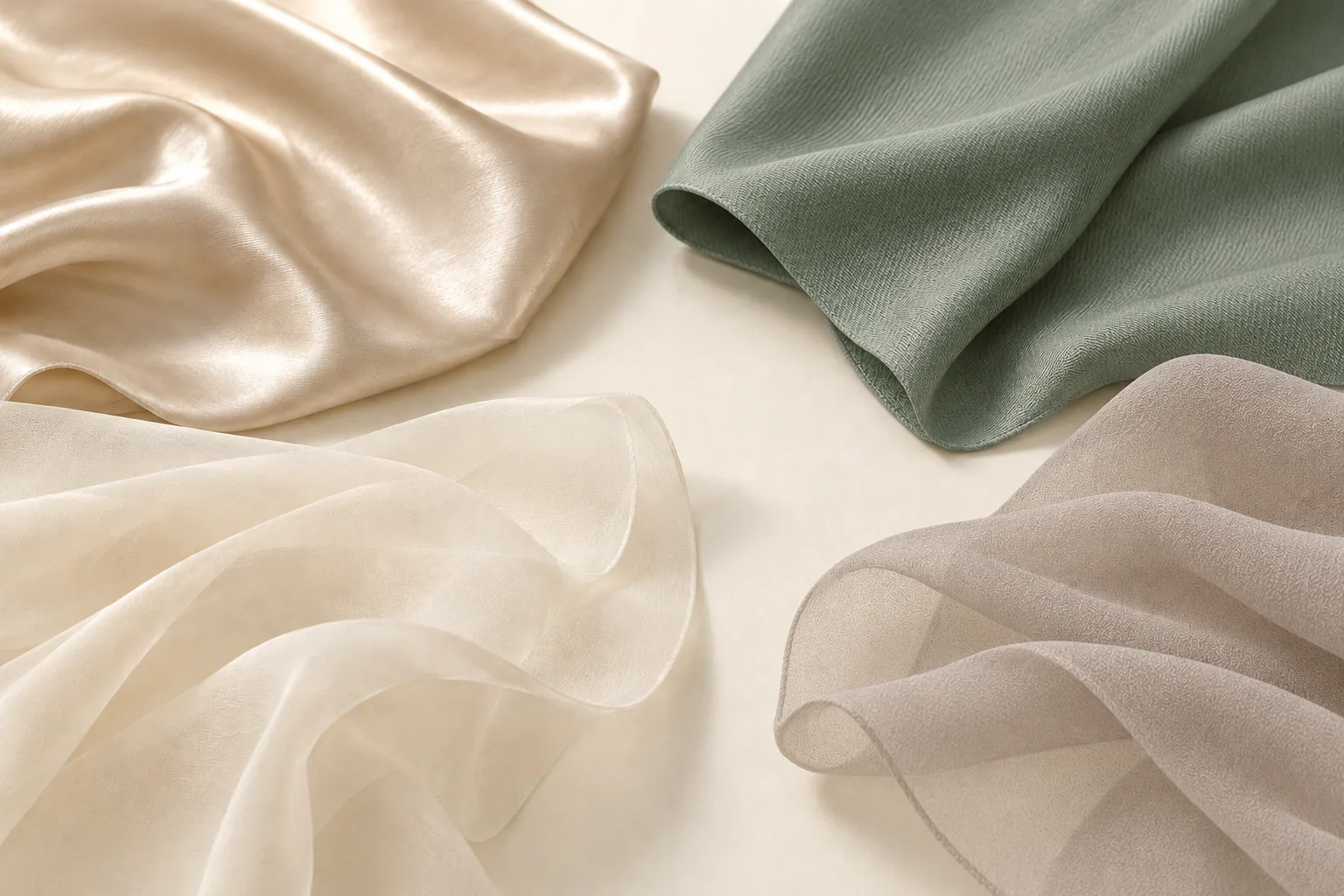
Silk and polyester remain distinct material lines. The selected swatch—not a trade name or display image—fixes composition, construction, weight and hand feel.
Silk, in four expressions.
Compare surface, weight, transparency and drape. 100% mulberry silk is an available composition option; the actual fibre declaration and weight are fixed for the selected fabric.
Specify. Fibre percentage · construction · momme or gsm
Review. Confirm the face and reverse, exact construction, momme, opacity and print result.
Fabric weight per area. 1 momme is approximately 4.34 g/m².
Yarn linear density. 20D or 30D is not fabric gsm or silk momme.
02 / Edge finishing
The detail
that finishes the piece.
Hand-rolled and machine-hem routes are available. Neither is a universal ranking: approve the selected construction on the chosen fabric.
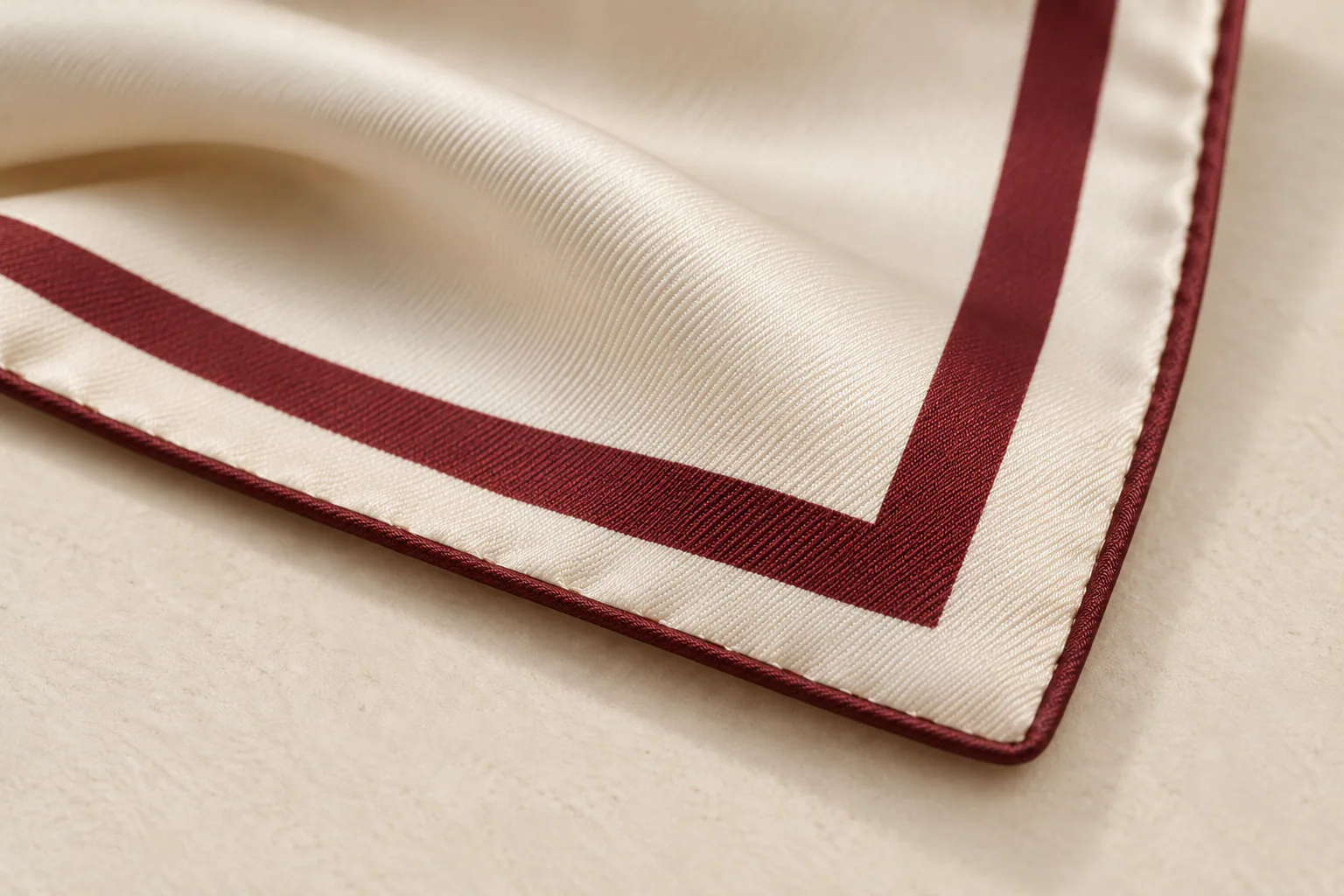
A softly rounded edge.
A hand-rolled finish creates a dimensional edge. Review the roll, discreet stitches and corner execution on the selected fabric.
- Agree
- Finished edge width · turn-in allowance · thread colour
- Inspect
- Stitch formation · corners · evenness or puckering · loose threads
- Record separately
- Cut size · finished size · measurement method · tolerance
No universal 1 cm rule. The supplied reference does not establish whether 1 cm means an allowance or a supplier-specific edge.
03 / Nominal formats
A format for
the way it is worn.
These 11 dimensions are confirmed custom-development options. Final finished measurements, allowance and tolerance are agreed per order.
Square
Neck / bag accent
| Format | Nominal cm | Design use |
|---|---|---|
| Square | 50 × 50 cm | Neck / bag accent |
| Square | 55 × 55 cm | Neck / hair styling |
| Square | 70 × 70 cm | Neck / head styling |
| Square | 90 × 90 cm | Classic square / varied folding |
| Large square | 110 × 110 cm | Shoulder wrap / headwrap; verify coverage |
| Long | 45 × 170 cm | Neck drape |
| Long | 55 × 175 cm | Long scarf / shoulder drape |
| Long | 70 × 180 cm | Wrap / broader coverage |
| Double-layer narrow | 5 × 100 cm | Bag / hair / neck accent |
| Double-layer narrow | 6 × 120 cm | Longer narrow styling |
| Double-layer narrow | 9 × 100 cm | Wider narrow scarf |
Double-layer narrow describes a sewn construction, not double-sided printing. Confirm front/back artwork, print process and assembly separately.
Buyer FAQ
Name each part of the specification.
Is satin the same as silk?
Silk is a fibre. Satin is a construction that can be made using different fibres. Specify fibre composition and construction separately.
What is the difference between momme, gsm and denier?
Momme and gsm describe fabric weight per area; 1 momme is approximately 4.34 g/m². Denier describes yarn linear density. A 20D or 30D label is not a fabric-weight specification.
Are the listed sizes finished dimensions?
The listed dimensions are nominal format options. Finished size, measurement method, cut allowance and tolerance are agreed in the sample specification.
Should I choose a hand-rolled or machine hem?
Choose according to fabric, intended edge appearance, quantity and budget. Approve roll or fold width, stitch appearance, corners and evenness on a physical sample.
How close can my logo sit to the edge?
Keep essential marks within the approved safe area. Its position depends on the finished outline, printing and edge process; the artwork template establishes the actual allowance.
Does a double-layer twilly mean double-sided printing?
No. Double-layer describes the sewn construction. Front and back artwork, print process and assembly are specified separately.
Brand & pack-out
Carry the specification to presentation.
packaging
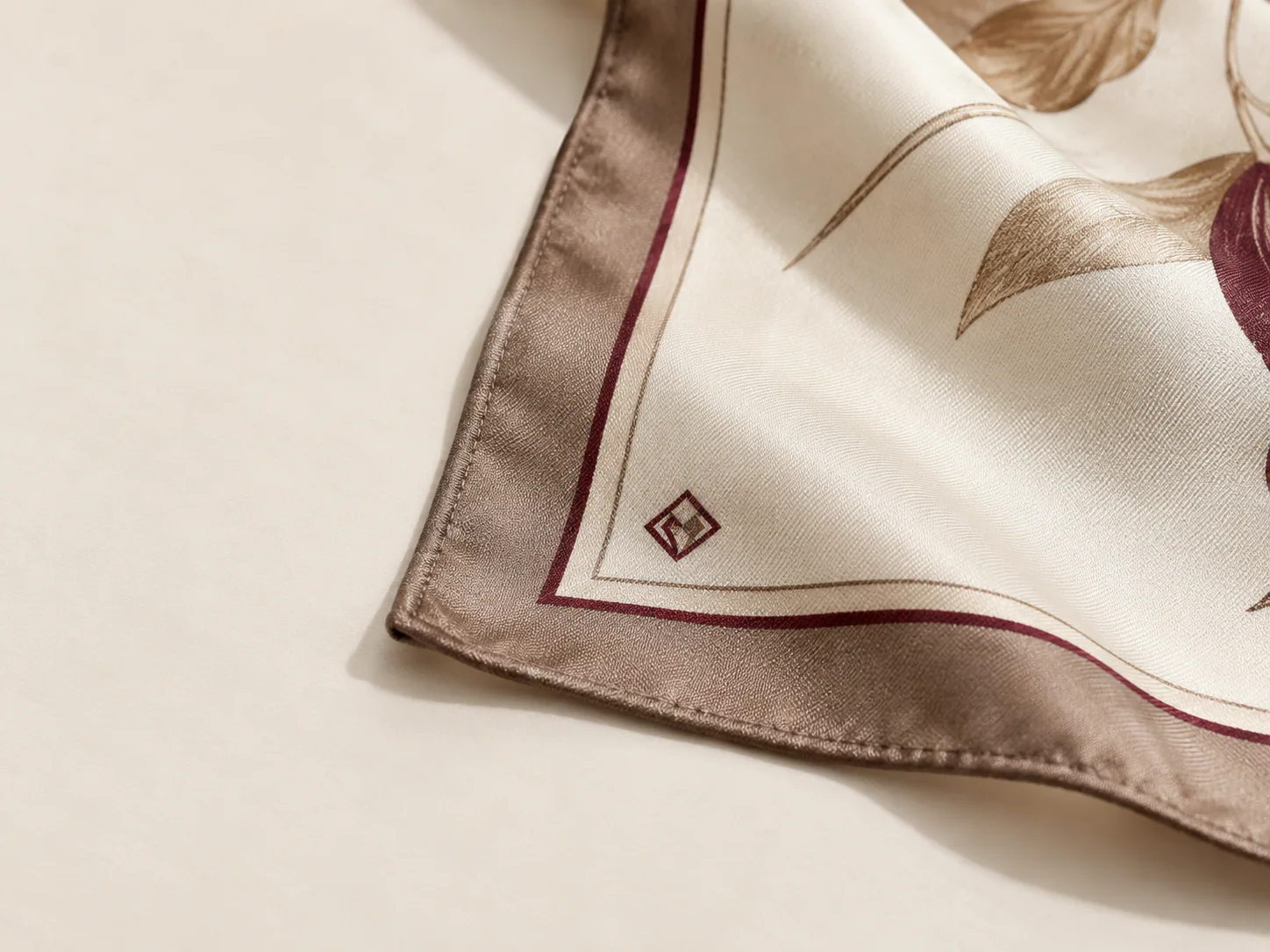
Logo placement
Place a brand mark within approved artwork or at an agreed position. Size, colour and print behaviour are checked against the selected product.
AI-generated illustration · A small brand mark printed inside the border of a scarf corner. Confirm size, colour and position on the actual sample.
packaging
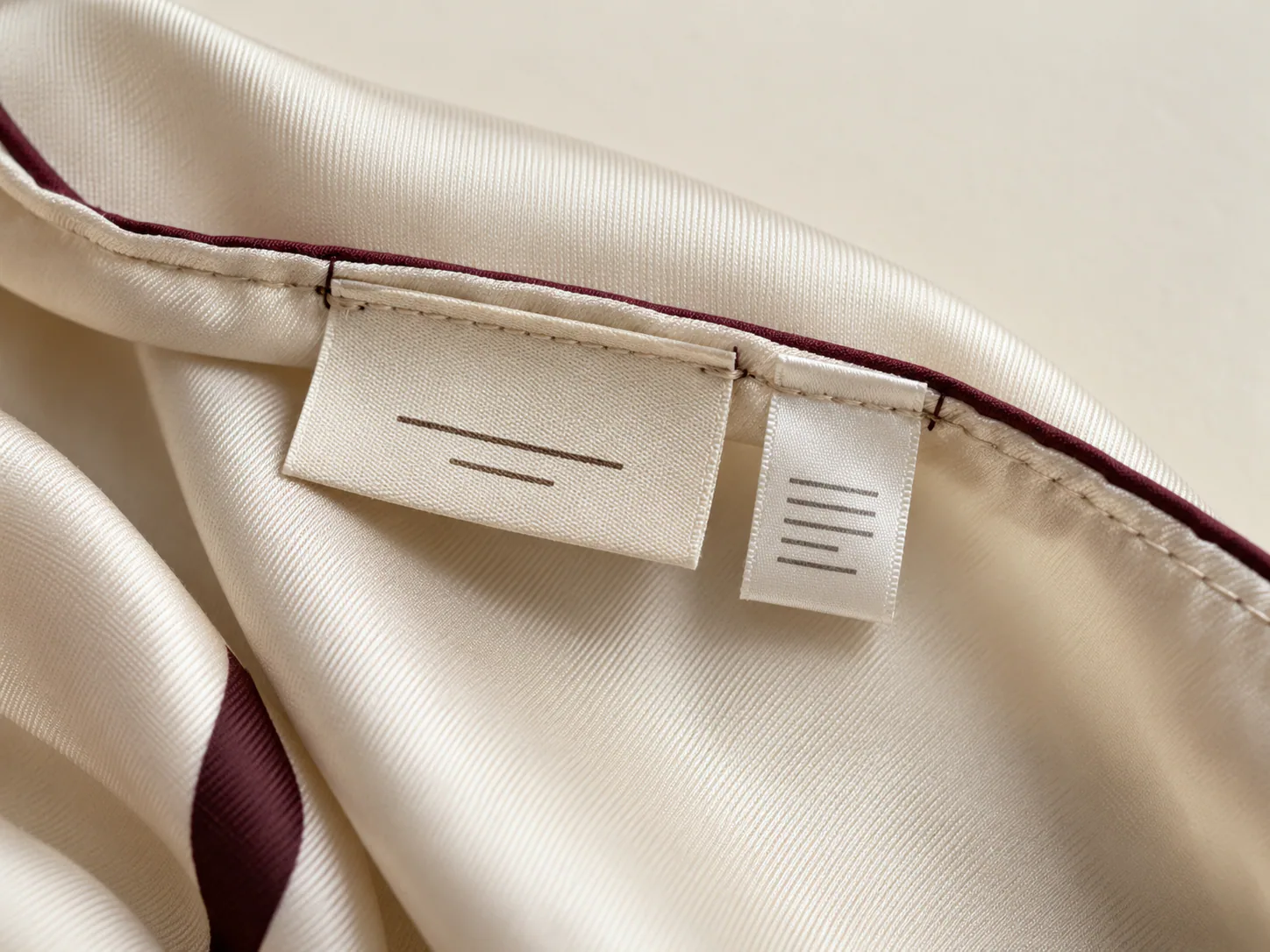
Care & woven labels
Define content, language, fibre declaration, size and attachment method as part of the product specification.
AI-generated illustration · A woven brand label and a care label sewn along a scarf hem. Confirm label material, wording and attachment on the actual sample.
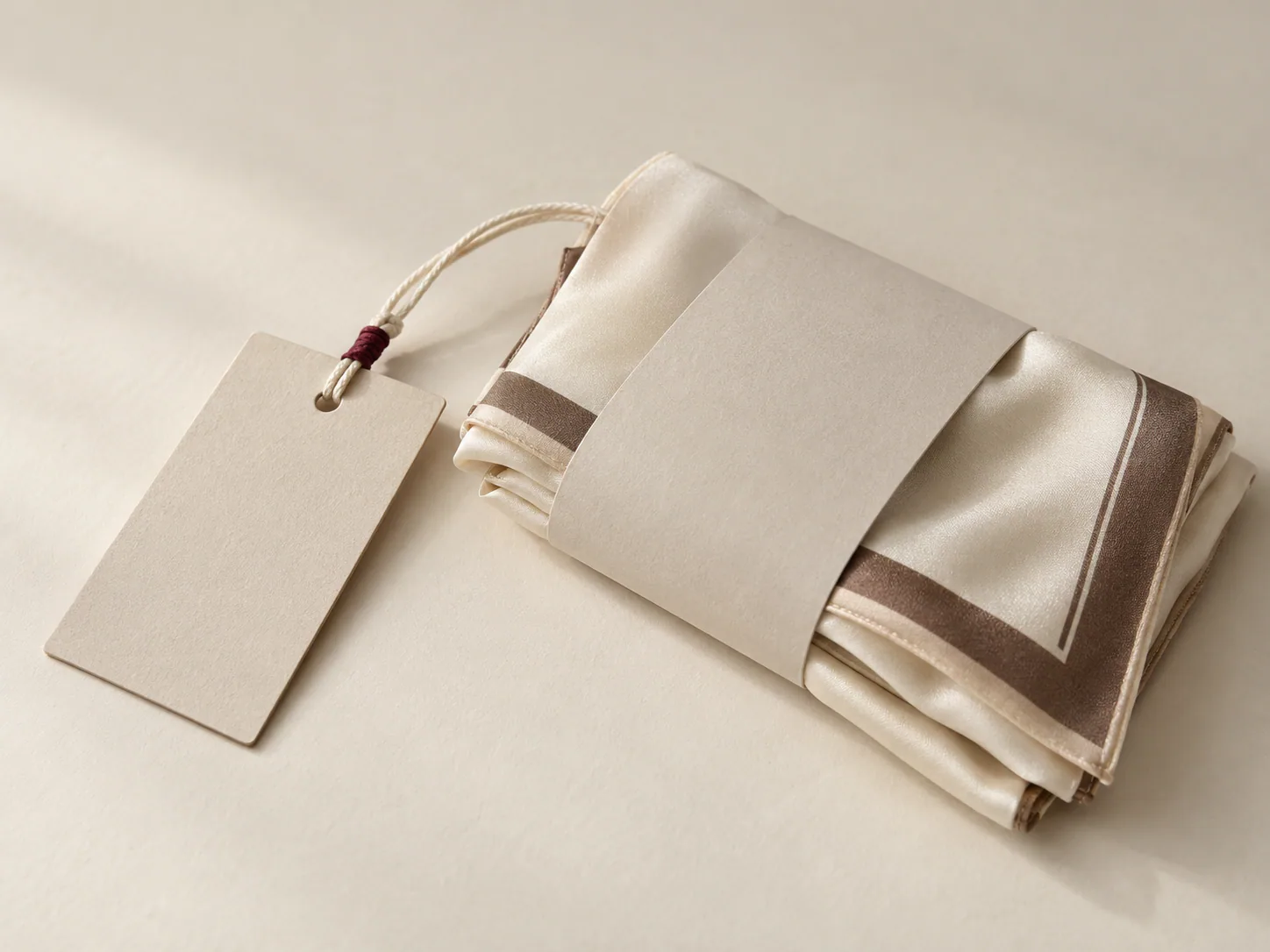
packaging
Hangtags & paper sleeves
Discuss print, stock, finish, attachment and information hierarchy as part of the pack-out rather than as a generic add-on.
AI-generated illustration · A folded scarf in a paper sleeve with a corded hangtag. Confirm paper stock, print and attachment on the actual sample.
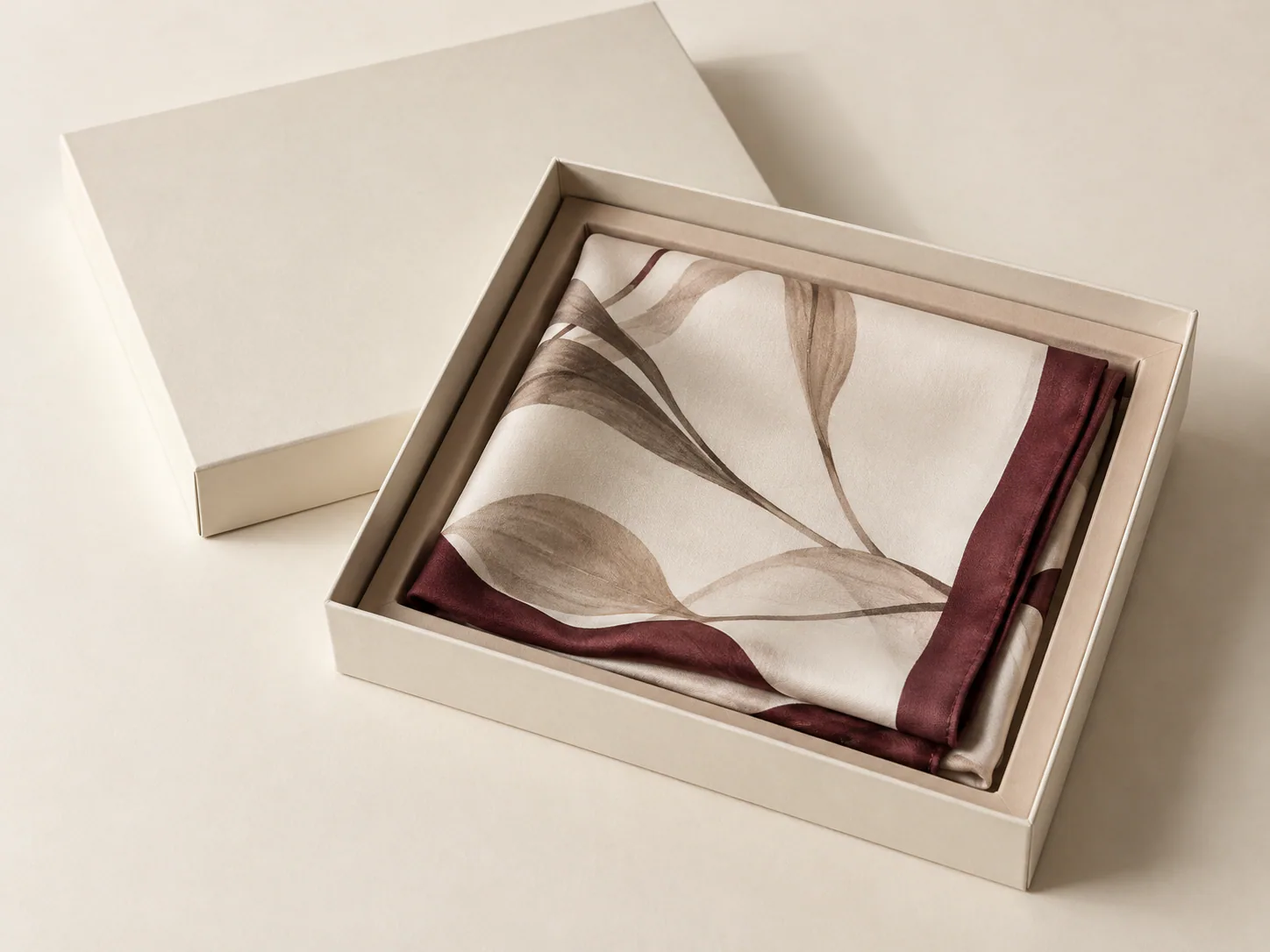
packaging
Gift presentation
Structure, insert, artwork, transit protection, quantity and cost are confirmed per project.
AI-generated illustration · A folded printed scarf in an ivory presentation box with a fitted insert. Confirm box structure, insert and fit on the actual sample.