Custom manufacturing / Private label
Your artwork.
On silk.
Custom Silk Scarves
Squares, long scarves and twillies developed for your brand. Choose the fabric, shape and finish—then bring your artwork, or develop a design direction with us.
Find your scarf format ↓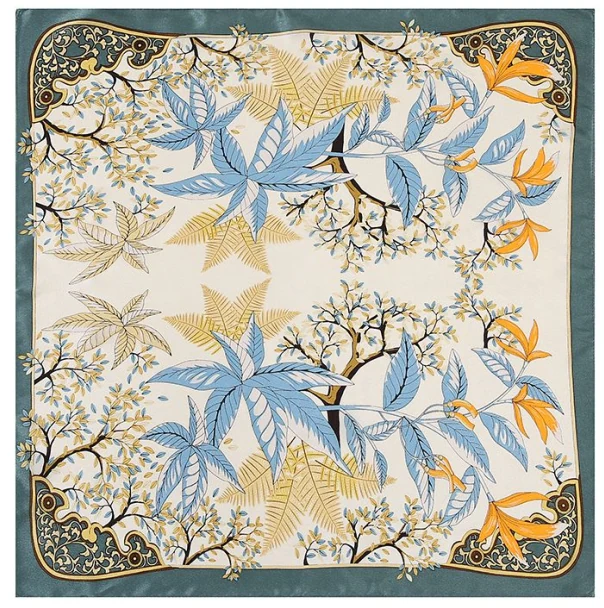
Your artwork, size and finish are developed separately.
- Custom minimum
- 50 pieces per style, per colourway
- Your starting point
- Artwork or idea OEM & ODM development
- Before production
- Sample approval Fees & timing quoted per project
01 / Find your format
A shape for
every direction.
Start with the way your scarf will be used. Catalogue references and a long-format display introduce the options; custom artwork, dimensions and construction are confirmed with your sample.
Neck, hair, retail & gifting
Give the centre, border and corners a considered place in your design.
Shown: ZS-53-005 · 53 × 53 cm
Custom sizes selected separately.
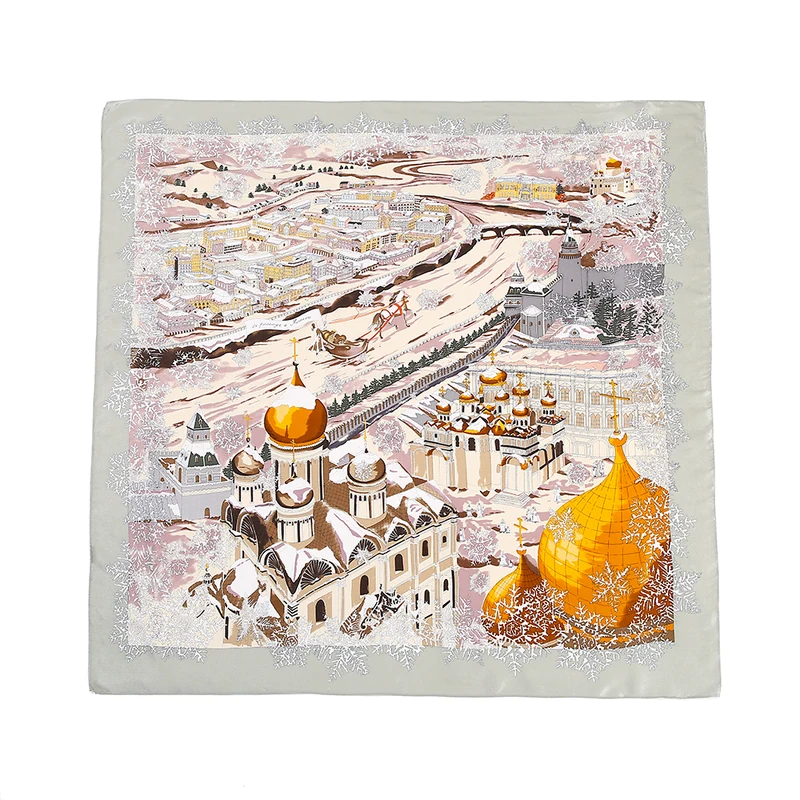
Headwrap, shoulder & statement styling
Plan coverage, artwork scale and how the motif reads when folded.
Shown: ZS-90-001 · 88 × 88 cm
Custom sizes selected separately.
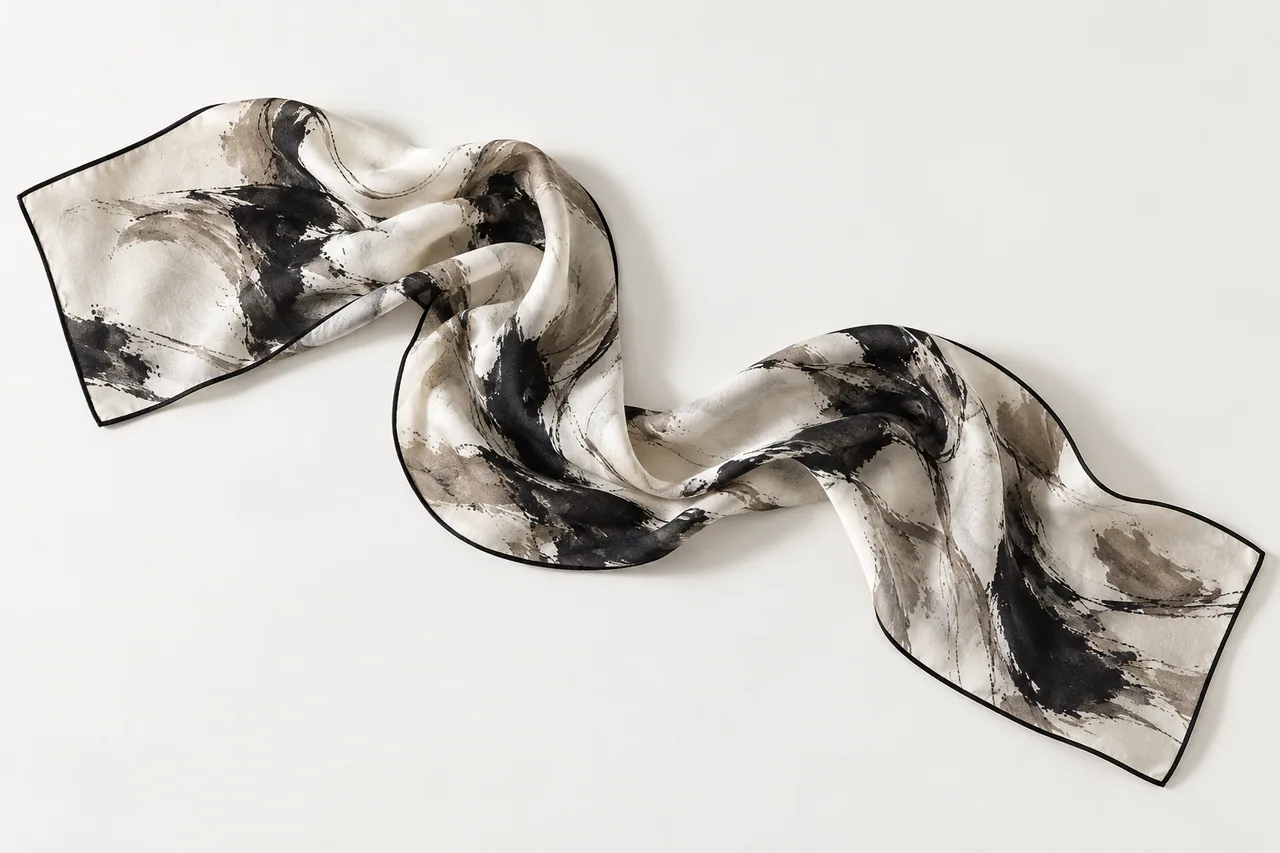
Neck, shoulder & travel
Develop the length, fall and artwork orientation around the intended use.
Format display · not an approved sample.
Select the size, fabric and finish for your project.
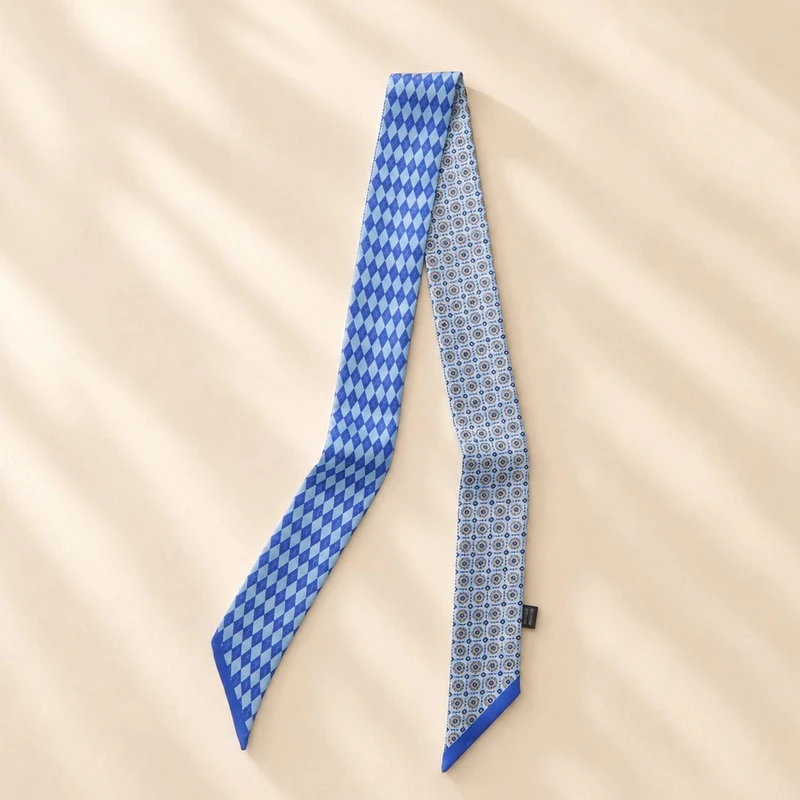
Bag handle, wrist, hair & slim neck
Create a dedicated narrow layout, with the tip and seam specified separately.
Shown: ZS-6-030 · 6 × 125 cm
Custom sizes selected separately.
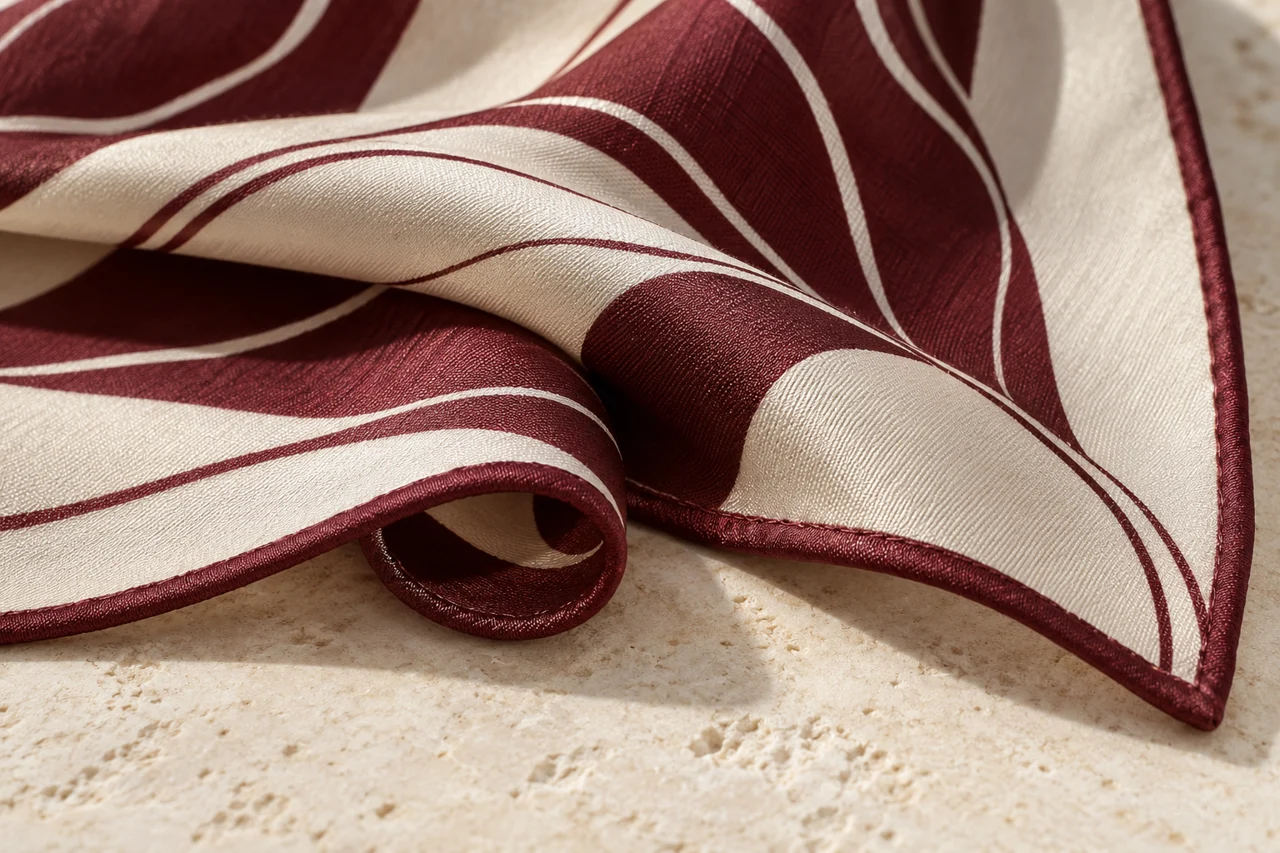
Details to approve
Look closer at the finish.
A beautiful print still needs a clear edge specification. Use the detail study to decide what the physical sample must show.
- Edge & corner
- Review roll or stitch construction, corner bulk, thread colour and how the edge sits when folded.
- Front & reverse
- Request both faces of the same identified sample. A front photograph cannot establish reverse colour or print penetration.
- Finished dimensions
- Measure the finished scarf flat without stretching. Record the measuring points and agreed tolerance with the sample.
The product decision studio
Feel the difference.
Specify what matters.
Build a direction around use, fabric and finish. These are preferences for quotation, not an approved specification. Open decisions can stay open.
Surface study / Twill
Texture. Structure. A considered fold.
A diagonal weave texture; lustre depends on the selected fabric and finish.
Separate catalogue image · 12 momme silk satin
Proportion example: 45 × 45 cm · common scale, longest side shown horizontally. Nominal outline only, not a fabric simulation.
The square
Choose a compact neck or hair accent, or a larger surface for the same collection. The tying method matters as much as the flat dimensions.
Use: Graphic squares, neck styling and narrow accessories where fold behaviour matters.
Check on sample: Fold, tie and inspect the face and reverse of an identified printed sample.
Please recommend; Please recommend; Edge: Please recommend
Custom scarf MOQ: 50 pieces per style, per colourway. Separate packaging minimums and feasibility to confirm.No enquiry is sent here. Selections stay in memory unless you opt into a local draft. The enquiry URL carries these choices so they can be reviewed after refresh.
A centre motif may disappear in a diagonal fold. Put essential signatures where they remain visible after tying; review the border and all four corners.
Record both finished sides on a relaxed, flat sample without stretching. Agree whether the rolled edge is included; the printed cut outline is not the finished square.
Confirmed custom silk-twill directions include 16 and 18 momme. Compare the selected weave and weight together; neither number promises softness or colour accuracy.
Approve the full flat view, a diagonal fold, a representative knot, the reverse and each corner—not only a close-up of the print.
Compare surface, hand feel, drape, transparency and print
Swipe or scroll horizontally to compare →
| Direction | Surface & hand feel | Drape & coverage | Artwork & sample decision |
|---|---|---|---|
| Twill | A diagonal weave texture; lustre depends on the selected fabric and finish. A more defined fold can suit a graphic square. Compare the actual swatch rather than assuming every twill has the same firmness. | Review knot bulk and how the corners fall in the intended size. Weight, yarns, density and colour all affect coverage; “twill” alone does not establish opacity. | Review fine outlines across the texture and check the border on both the flat and folded scarf. Fold, tie and inspect the face and reverse of an identified printed sample. |
| Satin / charmeuse | A smoother, more reflective face; the reverse can look different. Compare surface smoothness and slippage in the actual use. Satin names a weave direction, not a fibre. | Fluid-looking folds can support a dressier presentation; the selected weight and finishing still control the result. A lustrous face is not an opacity guarantee. Check one layer over a contrasting background. | Reflections can change how a colour reads. Review the print in consistent lighting and from more than one angle. Compare the face, reverse, knot hold and colour in the lighting relevant to your product. |
| Chiffon | A light, translucent direction, rather than the dense visual surface of an opaque scarf. Evaluate lightness and texture on the chosen swatch; a screen cannot establish softness. | Test the fall as a single layer and after folding. More layers alter both coverage and apparent colour. Consider whether show-through is desirable. A headwrap or shoulder cover needs a use-specific coverage check. | Look at the print against light and dark backgrounds; a transparent base changes its appearance. Request a swatch first. Confirm available construction, weight, print route and stable edge before development. |
| Georgette | A fine-grained crepe direction. Texture and lustre vary with yarns, construction and finish. Compare the surface against the intended skin contact and styling; a trade name does not fix hand feel. | Evaluate the fall and recovery after tying on the selected fabric, not on another crepe sample. Do not infer coverage from the name. Check the chosen weight and colour in the intended layer count. | Check small marks and logo edges on the textured surface before approving a full layout. Confirm the actual fabric reference, print detail, transparency and edge compatibility on a sample. |
From preference to approval
Connected decisions.
One coherent specification.
01Fibre, weave and weight are three separate decisions
Silk describes the fibre; twill and satin describe construction directions. A satin surface can also be made from polyester, so request the fibre declaration independently. Our custom silk directions include a selected 100% mulberry-silk composition; the final declaration belongs to the written specification.
Momme and gsm describe fabric mass per area, not the weight of one finished scarf. Finished weight also depends on area, layers, hems and labels. A higher momme is not, by itself, evidence of better yarn, print, finishing or durability. Compare identified swatches in the intended use. Crepe de chine and habotai can be discussed as fabric references, but availability and weight are not established by listing their names.
Choose fabric and weight ↗02Artwork needs a finished outline, not an automatic crop
Start from the finished format, then agree the print template, cut outline, hem allowance and safe area. Keep important logos away from areas lost in a roll, seam, fold or knot. Prepare a separate layout for a square, long scarf and twilly—even when they share one artwork system.
Bring the original editable artwork or a suitable high-resolution file, its intended scale and your colour references. Agree the usable file and print dimensions with the development team before sampling. Review small text, line thickness, border alignment and both ends or all corners on the relevant sample.
Plan artwork development ↗03Choose a print route by artwork and fabric
Digital and screen printing are routes to assess, not quality grades. Artwork detail, gradients, number of colours, material, order split and repeat-order needs affect the recommendation. Screen preparation and colour separations need a different review from a digital file; compare quotations on the same approved specification.
Agree the physical colour reference, lighting and acceptable variation before approval. A monitor cannot approve the finished colour. Inspect penetration and reverse readability separately: a visible reverse is not automatically a controlled double-sided print. Double-sided printing and a sewn double-layer product are different constructions. Sublimation is not a substitute process for printing natural silk.
Approve print colour ↗04The edge changes touch, corners and finished size
A hand-rolled direction creates a rounded edge; a machine-hem direction has a visible fold and stitch line. The fabric, thread, width of the roll or fold, corners and handling determine the actual result. Neither name is a universal quality guarantee.
Compare an identified edge on the chosen fabric. Check evenness, stitch appearance, loose threads, puckering and corner bulk. Agree the finished measurement after edging: cut dimensions and finished dimensions are not interchangeable. A twilly’s tip and sewn seam need separate construction approval.
Review edge finishing ↗05Specify the brand details and the pack-out separately
Plan woven or care labels, hangtags, paper sleeves and gift boxes around the actual scarf. State label position, attachment, required product information and the artwork version to approve. Care information must match the selected material, print and finished product—not a generic silk-care promise.
Confirm the folded product size before approving sleeve or box fit. Review paper, insert needs, protection and packing sequence as separate components. Packaging minimums are confirmed separately; the 50-piece minimum per style and colourway covers custom products, not every packaging component.
Plan packaging and labels ↗06Use the right sample before committing to bulk
Use a fabric swatch to select hand feel and weight; an existing product reference to discuss construction; a print trial to assess artwork and colour; and a finished prototype to review the complete specification. One sample does not automatically approve all of these decisions. Fees, schedule, start conditions and shipping scope are written into the sample brief.
For custom silk and polyester scarves, the minimum is 50 pieces per style, per colourway—not a mixed total across designs. Standard bulk production normally takes 7–14 calendar days after final artwork and specifications, sample approval and receipt of the agreed deposit. Transport is excluded; the final schedule is agreed per order. Exact ready-stock designs and dimensions follow a separate dated SKU availability check.
Choose the sample route ↗Start with something tangible
A swatch, a reference,
or your own printed sample.
Choose the sample that answers your next question: fabric and hand feel, an existing construction, or your artwork on the selected scarf. Fees, timing, shipping and any bulk-order credit are agreed in the sample quotation.
Plan my sample ↗Size & material reference
Start with the fold, not only the flat artwork.
For a retail square, review the motif after folding and tying. For a long scarf, check orientation at both ends. A twilly needs its own layout, tip and seam review; it is not an automatic crop of the square.
| Product direction | Dimensions (cm) | Fabric weight (momme / g/m²) | Material, construction & customisation |
|---|---|---|---|
| Silk square scarf | 45 × 45 cm / 50 × 50 cm / 53 × 53 cm / 55 × 55 cm / 65 × 65 cm / 70 × 70 cm / 88 × 88 cm / 90 × 90 cm / 100 × 100 cm / 130 × 130 cm | Silk twill — 16 momme; Silk twill — 18 momme | Selected mulberry-silk composition; twill or satin direction; border, logo, face/reverse and hand-rolled or machine hem. |
| Silk long scarf / shawl | 110 × 42 cm / 130 × 170 cm / 180 × 70 cm / 200 × 65 cm / 70 × 180 cm | Momme to agree for the selected fabric | Width, fall and opacity; artwork orientation; end treatment, edge and labels. |
| Silk twilly | 5 × 70 cm / 5 × 86 cm / 5 × 90 cm / 5 × 100 cm / 6 × 120 cm / 5.5 × 120 cm | Silk twill — 14 momme; Silk twill — 16 momme | Layer construction, tip shape, motif repeat and visible face after tying; double-layer does not mean double-sided printing. |
Finished dimensions, measurement method, tolerance, exact composition, print face and reverse, and finishing are recorded in the written specification and approved sample. Compare material and edge directions ↗
03 / Commercial scope
Know the conditions.
Then compare the quote.
- Minimums & variant split
- Custom orders start at 50 units per style, per colourway across our custom product range. We do not combine different custom styles or colourways to meet that minimum.
Quote each artwork, colourway and selected specification as its own line. Ready-stock references have separate order terms.
- Sampling
- Sampling timing and fees are quoted for the size, fabric, artwork and construction. Sampling starts after details are confirmed and the sample fee is received. Sample fees can be credited against a bulk order that meets the agreed quantity or value conditions. Shipping treatment is stated in the sample brief.
- Bulk production
- Sampling is quoted per project. Bulk production normally takes 7–14 calendar days after final artwork and specifications, sample approval and receipt of the agreed deposit; transport is excluded and the order agreement sets the final schedule.
- What changes the quotation
- Specify silk composition, construction and momme, the size and hem, artwork and colourways, quantity on each line, labels, packaging and destination. Those choices define the quotation scope. Quantity tiers and any change to the minimum are written into the quotation; no automatic discount bands are published here.
- Payment, freight & quotation
- Payment methods and deposit or balance terms are specified in the order. If a quality issue arises, send the specific details for review; the resolution is agreed case by case. Agree the trade term, currency, freight and tax scope, quote validity and quotation timing for your project. No fixed Incoterm, payment split or response deadline is published for every order.
04 / Buyer questions
Before you
approve the order.
What is the minimum order quantity for custom silk scarves?
Custom orders start at 50 units per style, per colourway across our custom product range. We do not combine different custom styles or colourways to meet that minimum. Record each artwork, colourway, material and size on the enquiry so the quotation can identify the separate product lines. Ready-stock minimums are confirmed for the actual order rather than taken from this custom minimum.
How does silk twill compare with satin for custom printed scarves?
We offer silk-twill square and twilly options and discuss silk-satin directions separately. Select the construction and weight for the intended fold, surface and drape. Review the actual face, reverse, colour and edge on the relevant swatch or sample before approving a product. A construction name alone does not establish the final fibre declaration or printed result.
Can I choose between hand-rolled and machine-rolled hems?
Hand-rolled and machine-hem routes are available for scarf development. The chosen route must suit the selected fabric and finished format. Review the edge, corners and stitching on the relevant physical sample and record the finish in the written specification. The photograph of another scarf does not establish the construction of your order.
Is the sample fee credited toward a confirmed bulk order?
Sampling timing and fees are quoted for the size, fabric, artwork and construction. Sampling starts after details are confirmed and the sample fee is received. Sample fees can be credited against a bulk order that meets the agreed quantity or value conditions. Agree the sample type, included items, shipping treatment and credit conditions in the quotation. A swatch, print trial and finished scarf answer different approval questions; do not treat one fee as covering every route.
05 / Continue the brief
Choose the next
useful comparison.
Artwork development background
Painted Garden: disclosed project facts ↗
These are anonymous SCARFTEX design stories. They do not disclose a client identity, order volume, product specification or delivery result.
Your next step
A few details.
A clearer starting point.
Nothing needs to be final. These optional choices travel with you to the enquiry form. No enquiry is sent from this page.