Direct answer
Start with the decision, then verify the specification.
Select a sample route by the risk you need to close. A fabric swatch can compare hand feel and construction; a digital layout proof can check scale and placement; a colour reference or print strike-off can narrow print decisions; a blank construction sample can check size, hem and label position; and a printed prototype can bring the chosen variables together. One sample does not reliably answer every question. SCARFTEX confirms sampling timing for each project; the clock starts once project details are confirmed and the sample fee has been received. The exact sample type, quantity, fee-credit rule, day basis, revision allowance, shipping method and schedule are confirmed with the written brief. This is not a fixed arrival promise.
Buyer scenario
Why this question changes the order.
A new brand has a scarf artwork and wants to know whether to pay for a full prototype immediately. The artwork border is still changing, the fabric has not been selected and the team has never handled the proposed weight. A finished prototype now may combine too many open decisions and become obsolete after the first review. A staged route—physical swatches, layout confirmation, print or colour reference, then the appropriate construction or printed sample—can make each payment answer a defined question.
Match the sample to the decision
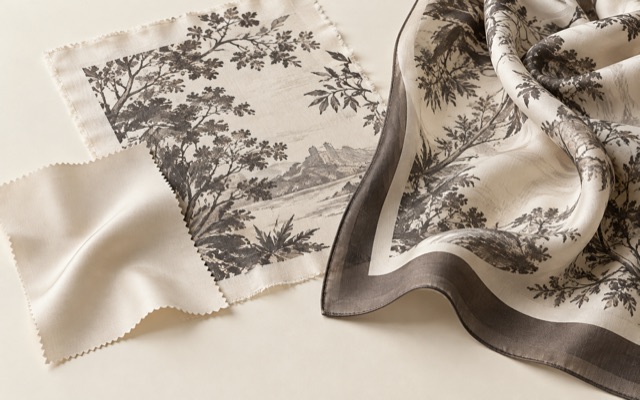
Use fabric swatches to compare fibre, construction, weight, surface, drape, opacity and hand feel. They do not prove the final printed colour, finished size or edge quality. Use a digital layout proof to check orientation, scale, border, logo and safe area; it does not prove fabric appearance. A paper colour proof or other screen-based output is also not a substitute for the selected fabric and print route.
A print strike-off or selected print reference can answer colour, resolution, fine lines and front-to-back appearance on the intended material route. A blank construction sample can answer finished dimensions, edge, corners, label position and packaging fit without paying to print final artwork. A printed prototype can combine the selected artwork, fabric, print and construction, but only if the earlier inputs are sufficiently defined.
Ask what the fee actually covers
A sample quotation should name the sample type, specification, number of units, artwork work, setup, material, printing, edge finish, labels, packaging, inspection, photographs and shipping included. Ask whether revisions create a new fee and whether any amount is credited after a qualifying bulk order. A statement that the sample is 'free' can still exclude artwork preparation, tooling, courier or the exact material route.
If a fee is creditable, record the qualifying order, deadline, credit amount and invoice treatment. Do not assume the full fee automatically returns. Separate non-recurring development work from the physical sample unit. When several colourways or sizes are being assessed, state whether the fee is per artwork, colourway, fabric, print setup or finished piece.
Define when the clock begins
The confirmed start event is the point when project details are confirmed and the sample fee has been received. The working- or calendar-day basis and treatment of shipping must still be stated in the project schedule. Buyer review time and further revisions should also be visible rather than absorbed into an undefined promise.
Ask for a short critical path: preflight, material availability, print preparation, construction, internal review, dispatch and transit. If a sample requires a new label, box, special fabric or external test, that component may follow a separate clock. A buyer can shorten decision time by sending consolidated comments from authorised reviewers and identifying which matters block the next stage.
Use staged sampling to control risk
Stage the route when the project has major open choices. For example, approve two physical fabric directions before adapting five artworks; check one representative print before sampling every colourway; or approve a blank box structure before printing it. This does not mean every project must follow the same sequence. It means the buyer should understand why each sample exists and what decision follows.
At every stage, issue a clear result: accepted, accepted with recorded limitation, revise, or rejected. Keep the approved reference and written specification aligned. A sample approved only for colour must not silently become approval of finished dimensions or packaging. Before bulk, list the decisions still open and the reference that will govern each one.
Sampling enquiry checklist
Review checklist
- Intended product, use, destination, quantity per style and colourway, and timing context.
- Artwork status, file type, ownership or authorisation and current version.
- Material, construction, weight, size, print, edge, label and packaging choices or 'please recommend'.
- The exact question each sample must answer and who will approve it.
- Sample type, quantity, fee, credit rule, revision allowance and shipping cost.
- Start event, production duration, dispatch method, transit and buyer review window.
- Physical or digital references and how they will be identified and retained.
- Remaining decisions and the written gate required before bulk production.