Direct answer
Assign an SSCC to each new logistics unit
If your forwarder splits a pallet of scarves and builds two new ones, treat each new pallet as a separate logistics unit for an order that uses pallet-level SSCCs. The party that creates the new units assigns their identifiers under the applicable GS1 and trading-partner arrangements. Link the old pallet to the new ones, confirm the contents of each, and have the authorised sender update the advance shipping notice (ASN) using the retailer’s agreed procedure. If the pallet is unchanged and a damaged label only needs reprinting, use the existing identifier.
Buyer scenario
Check what the receiving warehouse expects
These decisions matter when a retailer expects the physical labels to match the electronic notice it uses to receive stock. Confirm the rule for the exact distribution centre, order and delivery method before giving the warehouse a repacking instruction. A retailer that receives against cartons may ask for different label levels and data from one that receives against pallets.
Establish what each number identifies
GS1 Logistic Label Guideline · GS1 Portugal, section 3.2
The scarf order may contain several identifiers that belong to different parts of the shipment. Keep them in separate fields on the packing list or handover sheet. This makes it easier to see what changes when the forwarder moves cartons from one pallet to another.
| Record | What it identifies | What to check after a rebuild |
|---|---|---|
| SKU or GTIN | A product or defined trade item, such as a scarf colourway or standard case | Which items and quantities are on each new unit |
| SSCC | An individual logistics unit, such as a particular pallet or carton | Which units were created, which still exist and which identifier the receiver should scan |
| Load detail | The PO lines, carton counts and item quantities actually on a unit | That the detail matches what the warehouse built |
| ASN | The electronic notice sent to the receiving party | That the receiving record reflects the actual units, contents, and destination |
A carton GTIN may still describe the same trade item after a pallet split. If a retailer tracks individual cartons by SSCC, an intact carton and its identifier may also remain unchanged even though its parent pallet changes. The pallet-to-carton association in the notice or warehouse record may still need updating. Ask which hierarchy the receiving system expects before generating labels or moving cartons.

Decide whether this is a reprint or a rebuild
Start by asking what the warehouse physically changed. If the barcode became unreadable but the original unit and its contents remain intact, a reprint carries the same SSCC. Check that the new print matches the record and can be read. If the warehouse breaks the unit down and assembles a different one, the new unit needs its own SSCC. Record the link from each old unit to the new unit or units. A split may be one-to-many, and consolidation may be many-to-one. A label file left over from the original shipment cannot identify the newly built unit. GS1 US introduction to SSCC · GS1 Portugal, section 3.2
For a scarf replenishment order, record the before-and-after carton counts by PO line and colourway. If all cartons carry the same outer packaging, the count alone may conceal a swapped design. Check carton identifiers or marks against the picking record so each new pallet can be traced to its actual contents. Keep any removed, damaged or held cartons on a separate exception line.
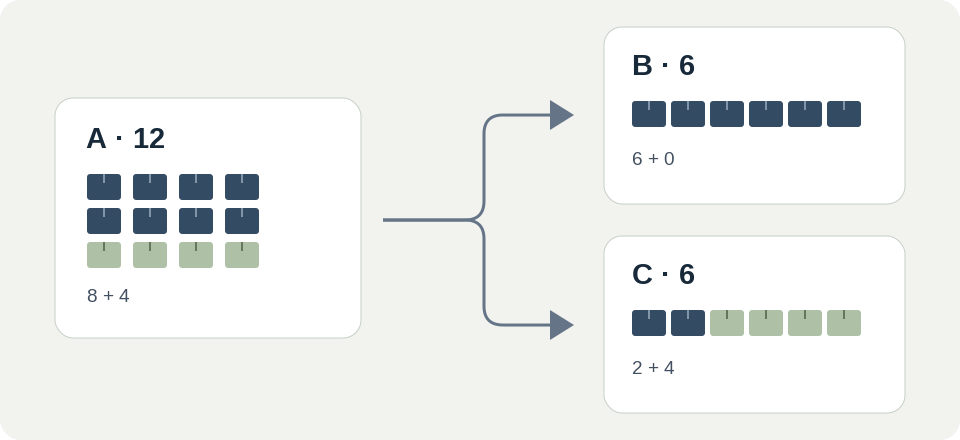
Consider an illustrative split. The original pallet A carries twelve cartons: eight navy and four sage. The warehouse builds B with six navy cartons and C with two navy and four sage. B and C each contain six cartons, but their SKU mix differs. The record links A to both new units and shows the contents of each separately. If one sage carton stays behind for reinspection, mark it as held and record five cartons on C. The shipping notice reflects what departs, while the exception record explains the difference.
Correct the ASN through the retailer’s agreed process
If the ASN has not been transmitted, build it from the final shipment records. Reconcile the PO and ship-to, each logistics unit, the related carton identifiers where required, and the item quantities. Use the dispatch event and data that the buyer’s instructions call for. GS1’s guideline recommends creating dispatch advice from the actual shipment. GS1 Logistic Label Guideline, section 9.3
If the original ASN is already in the retailer’s system, capture its reference and version. Ask the nominated EDI or portal owner whether the retailer requires a change, cancellation and replacement, or a receiving exception. Follow the method, timing and acknowledgement rules for that retailer. Preserve both the original notice reference and the revised record so receiving and procurement can find the same history. If the retailer supplies an acknowledgement, check what it covers. A technical acknowledgement and a warehouse-ready shipment can represent different checks.
A historical Foot Locker Asia Pacific vendor manual illustrates why the buyer’s requirements matter: it connects a common shipping label with an ASN. Its April 2022 instructions are an example of retailer-specific receiving practice. Use your own destination’s current routing guide to confirm which units need labels and how changes must be communicated. Foot Locker Asia Pacific vendor manual, section 5
Reconcile the label, load and notice before release
The final check works best at the point where somebody can see the physical load and compare it with the updated records. Ask the warehouse to verify each logistics label against the unit it is attached to. Keep obsolete labels from being scanned as active labels for rebuilt units, while preserving the old-to-new mapping in the record. Check the SKU and carton breakdown, then compare the final packing list, notice and receiving destination. If a delivery appointment uses pallet counts or shipment references, confirm whether that booking also needs a change.
Name the owner for each handover before the first split. The party building the unit confirms its contents and the new identification. A designated operator applies and checks the label. The authorised sender updates the notice. The dispatch owner checks that the paperwork and loading record agree. Procurement or retail operations follows the receiver’s exception procedure if the data is already locked or the shipment has left. One company can fill several roles, but each decision still needs a named owner.
One decision deserves its own line in the handover: who can authorise dispatch when the retailer has not yet confirmed the revised notice? For example, the carrier may be ready to collect while the buyer’s portal still shows the original unit. Record what was submitted, what the receiving contact confirmed, and who made the release decision under the buyer’s instructions. If the instruction is to wait, record the revised collection plan separately from the quantities already verified on the dock. That keeps a data delay from being mistaken for a packing shortage.
Use the worksheet once for each old-to-new mapping and destination. Repeat the row when one pallet becomes several, and use the exception field for any carton that remains behind. Save the final version with the packing list and notice reference. When briefing a custom scarf order, share the estimated quantity, intended use, packaging configuration, destination and current routing guide. Agree product packaging and logistics-data responsibilities with the relevant parties before dispatch. Freight and shipping planning · Branded labels and packaging · Discuss a scarf project
- Compare each scannable label with the ID on the final packing list.
- Check what actually ships, including the destination, carton counts and quantities by PO line.
- Record the ASN correction or receiving exception and the dispatch decision.
Pallet rebuild handover worksheet
Use one row for each old-to-new ID, destination and PO/SKU line. Enter the quantities for that line to avoid double counting. Export your entries before closing the page. When importing the CSV into a spreadsheet, set the logistics ID columns to Text to preserve leading zeros and long numbers.
Frequently asked questions
Can I reprint a damaged pallet label with the original SSCC?
Yes, if it is the same unchanged logistics unit. Reprint the existing identifier, verify readability and keep the label associated with that unit.
The cartons are unchanged. Do the new pallets still need new SSCCs?
Where pallet-level SSCCs are used, each newly formed pallet is a new logistics unit. Record which intact cartons moved to each pallet and update their association as required.
Can the product GTIN stand in for a pallet SSCC?
They identify different things. A GTIN identifies a trade item, while an SSCC identifies a specific logistics unit. Confirm which data the retailer asks for at each packaging level.
Should we cancel an ASN every time a pallet changes?
Follow the retailer’s receiving instructions. Some systems use an agreed amendment or replacement process, while others route the change through an exception contact. Keep the original reference and the outcome.
What if the trailer is already on the road?
Give the nominated sender and receiving contact the actual unit IDs, contents and affected order lines. Follow the agreed receiving-exception process and record the decision against the shipment.
Does a corrected ASN mean the retailer has accepted the goods?
A corrected ASN communicates shipment information. Goods receipt, quality acceptance and any invoice approval follow the applicable purchase and receiving terms.
Primary references
Standards and retailer guidance
Use the current routing guide for the receiving location and shipment to confirm label levels, notice changes and release conditions.
- GS1 Logistic Label GuidelineGS1
Section 9.3 covers dispatch advice based on the actual shipment.
- GS1 Portugal, section 3.2GS1 Portugal
Covers SSCC allocation and tracing original and reconstituted logistics units.
- GS1 US introduction to SSCCGS1 US
Explains what an SSCC identifies and how it is used on logistics units.
- Foot Locker Asia Pacific vendor manual, section 5Foot Locker Asia Pacific
April 2022 example of a retailer’s label and ASN requirements.