Direct answer
Start with the decision, then verify the specification.
Plan freight after defining the product and pack-out, but before treating the launch date as secure. A useful shipping brief states the origin and destination, consignee requirements, Incoterm with named place, freight mode, number of delivery points, individual pack, carton configuration, estimated or final carton dimensions and weights, customs responsibility, document needs, insurance decision and required-arrival date. Ask what is included in the freight estimate and when it will be refreshed using final packing data. SCARFTEX does not publish one universal shipping term or freight promise; route, responsibility, cost and timing are confirmed in the written quotation for each order.
Buyer scenario
Why this question changes the order.
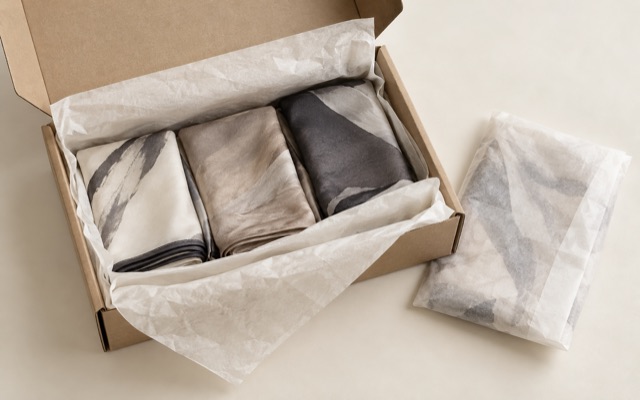
A brand approves scarves and asks for air freight to arrive before a campaign. The first estimate used polybag-only packing, but the final order adds individual gift boxes. Carton volume and handling change, which can change freight cost and the practical shipment plan. If the quote never named the destination airport, delivery point, customs party or included surcharges, 'air freight included' is not an actionable commitment. A late clarification can erase the time the buyer thought it had saved.
Work backwards from the real delivery point
Record the required-arrival date, launch date and the address or addresses where goods must be usable. Arrival at a port, airport, forwarder's warehouse, buyer warehouse and retail distribution centre are different milestones. Add internal receiving, allocation and store-delivery time where relevant. If cartons require store labels, mixed-SKU packing or a fixed appointment, include those requirements before final packing.
Separate the production plan from transit. Artwork approval, sampling, bulk production, final inspection, packing, freight booking, export handling, transit, customs clearance and last-mile delivery are linked but distinct. A shipping plan cannot compensate for an undefined production start or a delayed buyer approval.
Name the Incoterm and place precisely
Incoterms rules allocate specified costs, tasks and risk between seller and buyer; they do not by themselves set product ownership, payment terms or every contract issue. The quotation should state the selected Incoterms 2020 rule and the named place or port. Avoid an isolated acronym such as 'FOB price' without a port, cargo context or explanation of what the quoted amount includes.
Use the ICC's current official guidance with a freight or trade professional to select the rule appropriate to the transport plan. Record who arranges main carriage, who handles export and import clearance, where risk transfers, who pays destination charges and whether unloading or duties are included. If the buyer nominates a forwarder, define the handover contact, booking process and document cut-off.
Build the quote from packing data
Freight depends on the actual shipment profile. Request estimated carton count, dimensions, gross and net weight, units per carton, packing material and whether cartons contain one SKU or mixed SKUs. Mark estimates as estimates until the final product and packaging are approved. Individual boxes, inserts, pouches, hangers, corner protection and moisture-control materials can change volume and weight.
Ask an air-freight or courier quotation to identify pickup, origin charges, main carriage, fuel or security surcharges as applicable, destination handling, customs brokerage, duties and taxes, and final delivery. The exact line structure varies by route; the point is to expose what is included. A low freight number that ends at an airport is not comparable with door delivery.
Align documents and release
Confirm which commercial invoice, packing list, transport document, origin or preference document, material declaration or other records are required for the destination and buyer. Product description, value, quantity, carton data and Incoterm should be consistent across the final commercial documents. Regulatory and customs requirements depend on the market and transaction, so the importer or appointed adviser must confirm the final set.
Create a shipment-release checklist: approved bulk or inspection result, final quantity, final packing data, carton marks, document draft review, balance-payment condition, booking confirmation and consignee details. Do not treat an inspection pass as automatic authorisation to ship unless the contract says so. Keep a contact path for exceptions such as customs queries, delayed clearance or changes to the delivery appointment.
Ask when the freight quote expires and which amounts remain estimates. Exchange rates, chargeable weight, fuel or security charges, space availability and destination fees may be refreshed by the service provider. A responsible project record preserves the quoted assumptions and the final booking confirmation instead of representing an early estimate as a guaranteed landed cost.
Freight-planning checklist
Review checklist
- Required-arrival date, launch date and exact final delivery address or allocation points.
- Incoterms 2020 rule with named place or port and written inclusions.
- Freight mode, routing, nominated forwarder and booking responsibilities.
- Individual packing, units per carton, carton type, marks and mixed-SKU rules.
- Estimated and final carton count, dimensions, net weight and gross weight.
- Export, import-clearance, duty, tax, insurance, destination handling and delivery responsibilities.
- Required commercial and shipping documents with review deadlines.
- Inspection, payment and shipment-release gates plus exception contacts.
Primary references
Sources used for technical context
These sources support the general technical or regulatory context. They do not prove SCARFTEX capability, certification or the specification of a particular order.
- Incoterms® 2020 checklist and flowchartsInternational Chamber of Commerce