Direct answer
Brief the textile and the information around it together
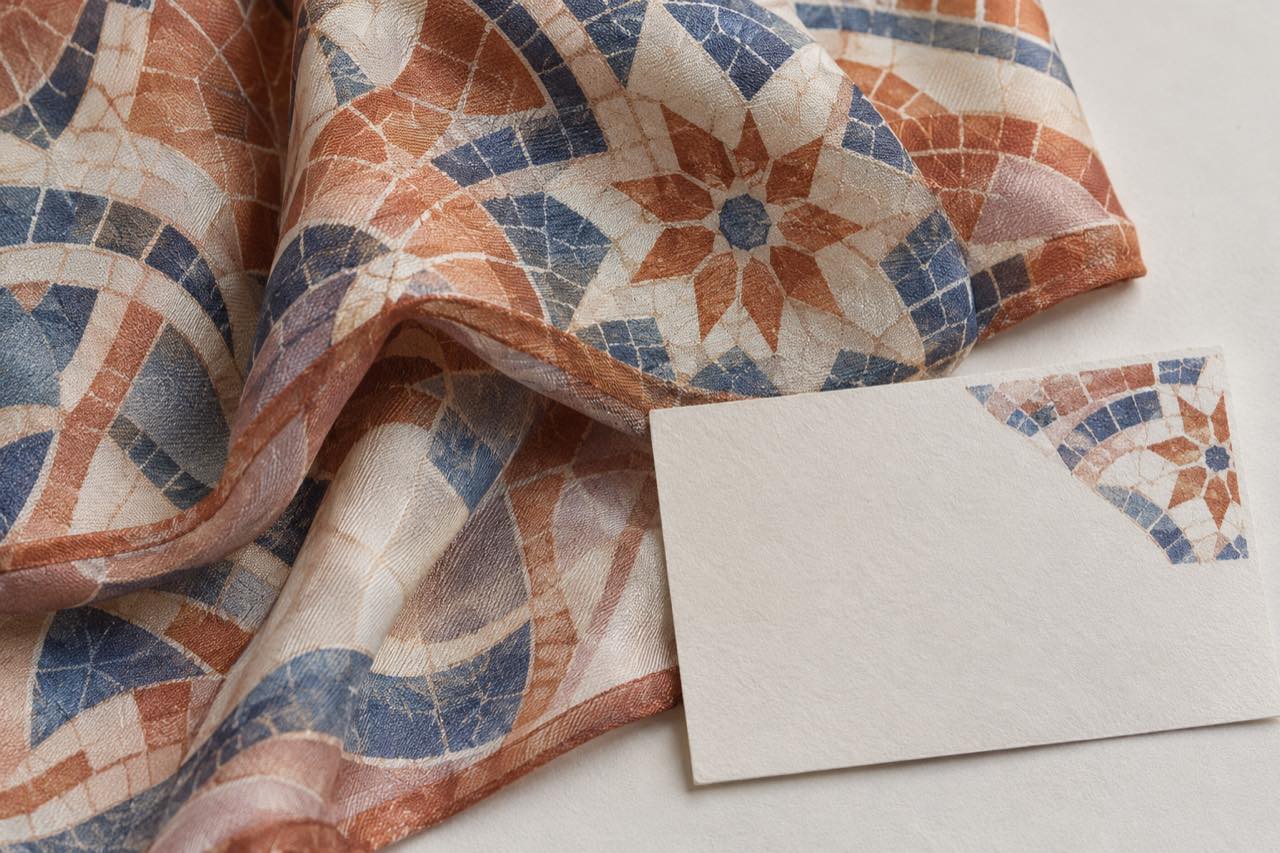
A museum scarf brief should define two connected deliverables: the textile product and the information supplied with it. For the story card and packaging, record the approved collection reference, interpretive text, image credit, languages, component dimensions, materials, barcode data, assembly instructions and review responsibility. Approve a complete packed sample when presentation or fit is part of the order.
Buyer scenario
The decision behind the brief
The aim is to let a visitor understand the connection to the collection while giving retail and production teams an item they can receive, display and replenish. A beautiful box cannot compensate for an incorrect credit line. Accurate text is equally unhelpful if it is printed too small or placed where nobody sees it.
Give the card one clear job
Decide what the customer should understand after a short reading. The card might identify a painting, explain an architectural motif or introduce a new artist interpretation. Choose the connection that belongs to this product rather than condensing the museum's entire history into a small insert.
Write a short product statement before the longer copy. For a hypothetical architectural scarf, it could explain that the border draws from a named ceiling detail. The actual name, date and attribution must come from the institution's approved information. This is a planning example, not a description of a SCARFTEX customer project.
Ask how the visitor encounters the story. If the scarf is folded inside an opaque box, the exterior may need enough information to support a purchase. If it hangs openly, a smaller card may work, provided the required product information remains available.
Distinguish reproduction from interpretation
A reproduction, a crop of a source image and a newly illustrated design can connect to the same collection object in different ways. Describe the relationship accurately. Do not imply that an artist designed a scarf simply because the product borrows a detail from an artwork.
Request an approved source record with the title, creator or attribution, date or period, collection reference and image credit where applicable. Ask the institution which elements must appear and whether their exact wording, order and punctuation are controlled. Do not invent a credit format for the supplier to guess.
Keep the source image and the final production artwork separately named. The card should refer to the design that is actually being sold. A late crop, colour change or addition of a new motif may require the interpretive text to be reviewed again.
Look at supplier examples as starting points
Public portfolios show different ways to connect cultural material with retail products. Hellen van Berkel's museum-collaboration page presents textile accessories developed around collection and building references, including packaging associated with twilly projects. These are first-party case descriptions, not evidence of SCARFTEX work. Source: Hellen van Berkel museum collaborations.
Mali Design Studio describes supplying a written story with its wholesale scarves. That illustrates one service model: the explanation can be planned as part of the merchandise rather than left to the shop after delivery. Its claims do not establish a sales uplift or a universal requirement for museum products. Source: Mali Design Studio.
Use these examples to ask better questions. Who writes the text? Who approves the cultural interpretation? Who checks the physical result? A portfolio photograph rarely answers all three.
Make the packaging quote a component schedule
Separate the scarf from every component around it. This makes the supplier's offer easier to compare and prevents “complete packaging” from becoming an undefined promise.
| Component | Information needed before quotation or approval |
|---|---|
| Story card | Finished dimensions, sides, languages, paper, print and approved copy |
| Hangtag or sleeve | Attachment method, visible information and relationship to the folded scarf |
| Box or pouch | Internal fit, material, closure, print and protective purpose |
| Tissue or protective layer | Quantity, placement, colour and contact with the scarf |
| Retail label | Product code, barcode, price or data owner and placement |
| Outer carton | Pack quantity, protection, identification and destination grouping |
| Assembly | Folding reference, component order and responsibility for final checking |
Let the physical requirements determine the dimensions. A card may fit into the box but block the artwork, catch on the hem or move during handling. Review the complete arrangement rather than approving each component in isolation.
If the buyer supplies printed cards, establish when they must reach the assembly site and what happens if they are late. If the supplier prints them, identify who provides the approved files and who checks the delivered quantity and version.
Plan languages before layout approval
Translation changes space. A layout approved with a short English paragraph may not accommodate the complete translated copy, a mandatory credit and a barcode. Give the designer the approved language versions before treating the dimensions as settled.
Name a reviewer for each language and retain the exact text they approve. When a correction arrives, update the version record and tell the supplier which earlier file must stop being used. Avoid placing new copy into an old layout without another proof check.
A QR code can link to an exhibition page, extended interpretation or wearing guide. Decide who owns the destination, how it will be maintained after the exhibition and whether the printed card still explains the object if the link stops working. Test the printed code on the selected stock and finish, not just on a laptop screen.
Keep interpretation and product information organised
The story card does not replace the product's care, composition, origin or other information required for its destination and sales channel. Establish which information belongs on the sewn label, hangtag, pack or accompanying document, and have the responsible team confirm the applicable requirements.
Do not copy a competitor's care sentence because both scarves are described as silk. The fabric, print, finish and assembled components must support the instruction used for the actual product. Coordinate the product-information review with the care-instruction guide where that page is available in the current site version.
For inventory, the retail team should approve the SKU and barcode data. Check that the code identifies the correct design, size and language pack. Print a sample at final size and test it with the receiving or retail system expected to use it.
Approve a complete packed reference
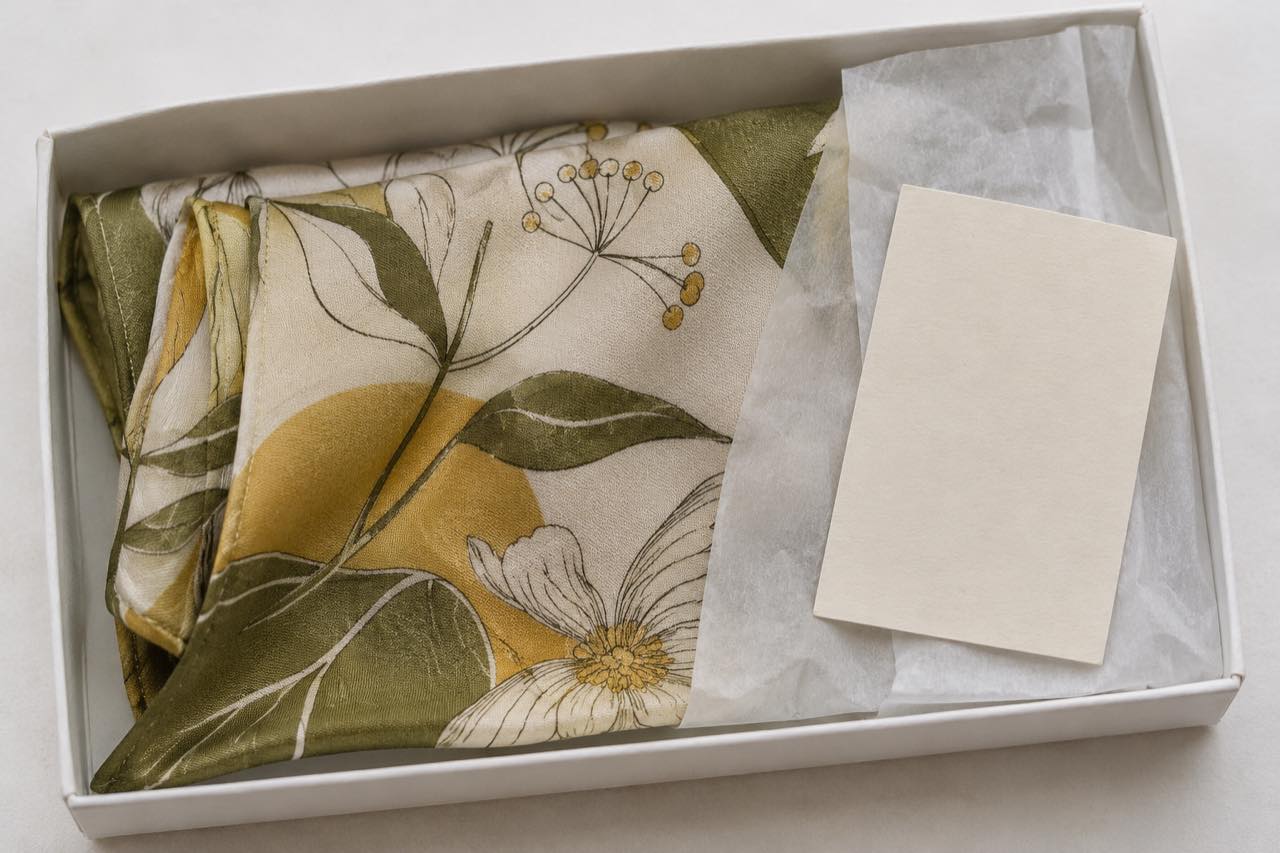
Bring the scarf, card, labels and package together before signing off assembly. The reviewer should be able to see what a shop employee receives and what the customer opens.
Check the fold, visible motif, card placement, printed text, barcode and closure. Examine whether the packaging causes crushing, rubbing or a sharp crease in an undesirable position. If the scarf arrives separately from its packaging, identify who completes the final assembly and against which reference.
Record accepted details and requested changes with photographs and version names. The approval should say whether it covers artwork only, print only or the complete pack. A prototype made from substitute board should not silently approve the final board specification.
At SCARFTEX, the artwork, specification and sample approvals needed before bulk production are agreed by project. Use that discussion to identify whether a packed sample is necessary for the order. For the component brief, continue with private-label labels and packaging.
Preserve the record for replenishment
Keep the final card artwork, approved translations, product specification, pack-out photographs and component schedule together. A reorder may be triggered by someone who was not involved in the original exhibition launch.
Before reprinting, ask whether the exhibition dates, institutional identity, prices, QR destination, rights wording or supplier details have changed. Separate usable surplus packaging from obsolete stock. The fact that a box remains in storage does not establish that its printed information is still suitable.
Before you send the brief
Review checklist
- Confirm approved collection text, credits and language versions.
- Quote and approve packaging components separately.
- Review a complete packed reference where fit matters.
Frequently asked questions
Does every museum scarf need a story card?
No. Choose the format that helps the retail setting and product. A sleeve, hangtag or other approved presentation may carry the required explanation more effectively.
Who should approve the text?
Name the responsible institutional reviewer, with rights, language and retail input as needed. The printer can proof the file but should not be expected to invent or approve historical attribution.
Can one card cover several scarf sizes?
It can if the story, credit and product identification remain correct. Review whether the same card fits each pack and whether variant information belongs elsewhere.
Can the QR code replace the printed story?
It can extend the information, but consider customers who cannot or do not scan it. Keep enough printed context to identify the product and its collection connection.
Should the story card and scarf sample be approved together?
Approve them together when placement, folding or product identity is connected. Separate approvals may be practical earlier, followed by a complete assembly check.
What should be included in an initial packaging enquiry?
Send the scarf format, estimated quantity, intended use, approved or draft text, language needs, preferred pack and arrival requirement. Identify which components and approvals the institution will provide.
Primary references
Sources used for technical context
These sources support the general technical or regulatory context. They do not prove SCARFTEX capability, certification or the specification of a particular order.
- Museum collaborationsHellen van Berkel
First-party portfolio; not a SCARFTEX project or independently audited client claim.
- Commissioned artwork and wholesale servicesMali Design Studio
First-party commercial statements, not SCARFTEX capability evidence.