Direct answer
Count each style and colourway before adding the project total
SCARFTEX’s custom orders start at 50 units per style, per colourway across the custom product range. A project total does not replace that line-level minimum. Three distinct styles in one colourway each therefore require at least 150 units if each line is ordered at 50. This is an arithmetic example, not a customer order. Record every planned variant before requesting a quote, and confirm how changes in size or material define the style. Ready-stock quantities and sample orders follow their own confirmed order scope.
Buyer scenario
Example: 150 scarves can describe two very different orders
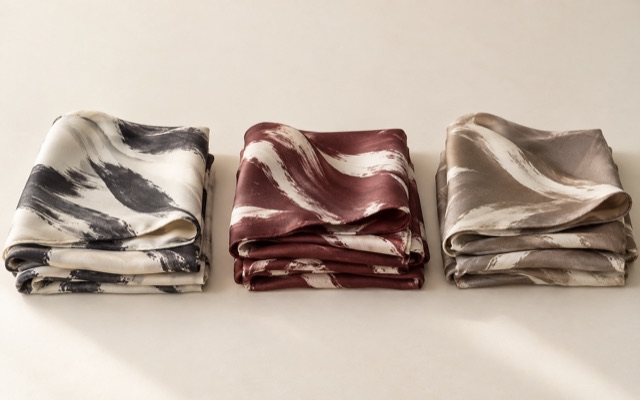
In a planning example, a buyer has a budget for 150 scarves. One design in three colourways creates three quantity lines. Three designs in three colourways each create nine lines. Calling both ideas a 150-piece collection hides the difference. Listing the styles and colours first helps the buyer reduce the range or change the quantity before paying for artwork and samples.
Define the unit behind the minimum
A minimum is meaningful only when the unit being counted is explicit. Ask whether the quantity applies to each style, colourway or another named production unit. A supplier’s policy is its own commercial condition, not an industry-wide rule. Do not borrow a lower threshold from a different supplier or assume that a marketplace listing applies to a developed private-label product.
For SCARFTEX, the current custom-order basis is 50 units per style, per colourway, including the custom accessory range. Keep the order lines clear when discussing a coordinated collection: a shared print story does not make a scarf, eye mask and scrunchie the same product style.
Build a style-and-colourway matrix
Give each style a short code and describe its product type, dimensions, material and artwork version. Then list each colourway with its own quantity. Add the quantities only after every line has been checked against the confirmed minimum. This avoids a quotation based on a collection total that cannot be distributed as the buyer expects.
Use the following numbers only to understand the counting method. They assume that each listed design and colourway is already agreed as a distinct order line. They do not settle whether a size change, construction change or shared artwork constitutes a new style; the supplier should confirm that definition against the exact brief.
| Illustrative order | Quantity calculation | What must be clear |
|---|---|---|
| 1 style × 1 colourway | 1 line × 50 units = 50 units | The product and artwork version for that line |
| 1 style × 3 colourways | 3 lines × 50 units = 150 units | Three named colourways, with approval references |
| 3 styles × 1 colourway each | 3 lines × 50 units = 150 units | Three separately identified styles |
| 3 styles × 3 colourways each | 9 lines × 50 units = 450 units | The full matrix, not a shared 150-unit total |
| 20 + 15 + 15 across three styles | 50 total; each line is below 50 | An aggregate total does not meet the stated custom minimum |
Resolve size, material and component questions explicitly
If one design is planned in two sizes, ask how those variants will be classified and quoted. Do the same when the material, print route or construction changes. Do not assume that sharing an artwork file combines the production quantities. A written line definition is easier to check than an informal promise that the order can be mixed.
List labels, sleeves, boxes and other presentation items in the quotation scope. Confirm the required quantities, charges and treatment of any surplus components. This is a clarification of what is supplied and billed, not an invented exception to SCARFTEX’s stated custom-product minimum. Do not turn another supplier’s packaging policy into a SCARFTEX requirement.
Keep custom production, samples and ready stock separate
A pre-production sample answers an approval question; its quantity is not evidence that the same order can be manufactured as an unrestricted small bulk run. Confirm the sample type, fee and terms before treating it as a way to test the market. The sample may not include every colourway, label or packaging item in the eventual collection.
Ready stock is a different purchasing route. For SCARFTEX, stock quantities are confirmed against the actual order rather than inheriting the custom minimum. A catalogue image also does not prove current availability. Ask which products and quantities can be supplied, what branding changes are possible, and whether those changes would create a custom project.
Use the matrix to control the quotation and later changes
Send the versioned matrix with the buying brief and ask the quotation to refer to it. The expected quantity and product use are the starting information for a SCARFTEX project. Artwork status, packaging and target arrival date make the first response more useful. Mark any line still under discussion so it is not mistaken for an approved order.
If the range changes after quotation, update the matrix before comparing the revised price or schedule. Removing a colourway, splitting a style or adding a packaging version changes what is being bought. Keep the previous version for reference, but make one current version authoritative. This prevents design, finance and production from approving different collections.
Review checklist
- List the product, style code and artwork version.
- Give every colourway its own quantity.
- Confirm how size and material changes define styles.
- Record labels and packaging in the quote scope.
- Keep stock, samples and custom production as separate routes.
- Reissue the matrix when the collection changes.
Style and colourway quantity plan
Use the quantity plan to list each style and colourway separately. Check each custom line against the 50-unit minimum before adding the total, and ask us to confirm how size or material changes are classified.
Frequently asked questions
Can 50 units be split across three different designs?
Not under SCARFTEX’s stated 50-unit minimum per style, per colourway. A project total cannot replace the quantity required for each line.
Does the 50-unit custom minimum apply only to scarves?
The confirmed custom-order basis applies across the custom product range. Identify each product style and colourway in the quotation.
Does the same rule apply to ready stock?
No. Ready-stock quantities are confirmed against the actual order and current availability.