A centre motif may disappear in a diagonal fold. Put essential signatures where they remain visible after tying; review the border and all four corners.
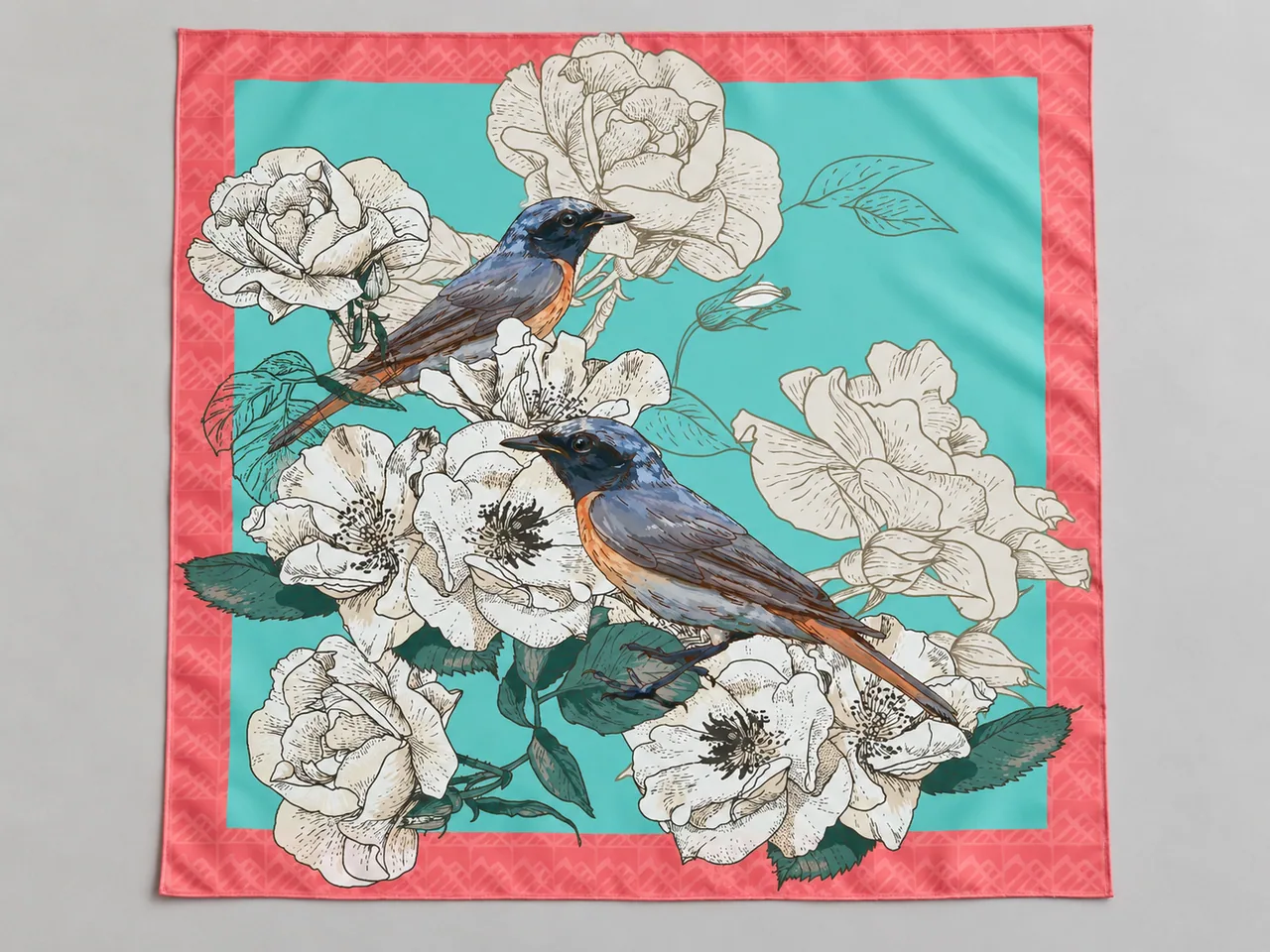
Review the complete artwork, the visible area after folding or wearing, and the print and edge direction together.
FS-SQ-01 / Custom Silk Scarves
Custom square silk scarf
An artwork-led silk square for fashion, cultural retail, corporate gifting and coordinated collections. Use this page to compare indicative sizes, material lines, print and edge directions before requesting a project-specific sample and quotation.
Custom minimum50 pcs / style / colour
Material lineSilk
ApprovalProject-specific sample
Build a working specification
01 Nominal format size
Current brief45 × 45 cm·Please recommend·Please recommend
Available nominal custom-format options. Final finished dimensions, measurement method, hem allowance and tolerance are agreed per order.
Custom scarf MOQ: 50 pieces per style, per colourway for custom silk and polyester scarves. Different styles or colourways are not automatically combined.
- Material lines
- Silk
- Uses
- Neck · Hair · Bandana · Small-format gifting
- Composition
- 100% mulberry silk is available as a selected material option. The final fibre declaration belongs to the written product specification.
- Weight
- Silk construction and momme are selected per project and confirmed against the relevant swatch or sample.
- Print direction
- Client artwork or selected archive pattern. Front/back appearance and colour are sample checkpoints.
- Edge directions
- Hand-rolled · Machine hem
- Brand & pack-out
- Logo placement · Care or woven label · Hangtag · Paper sleeve · Gift box
Specification checkpoints
These points are confirmed in the project brief, quotation and relevant sample before production.
- Selected fibre, weave and weight
- Print route and reverse-side result
- Edge/material compatibility
- Sample route and fee
- Packaging minimums, price and bulk timing
The product decision studio
Feel the difference.
Specify what matters.
Build a direction around use, fabric and finish. These are preferences for quotation, not an approved specification. Open decisions can stay open.
Surface study / Twill
Texture. Structure. A considered fold.
A diagonal weave texture; lustre depends on the selected fabric and finish.
45 × 45 cm · common scale, longest side shown horizontally. Nominal outline only, not a fabric simulation.
The square
Choose a compact neck or hair accent, or a larger surface for the same collection. The tying method matters as much as the flat dimensions.
Use: Graphic squares, neck styling and narrow accessories where fold behaviour matters.
Check on sample: Fold, tie and inspect the face and reverse of an identified printed sample.
06 / Your working direction
45 × 45 cm; Please recommend; Edge: Please recommend
Custom scarf MOQ: 50 pieces per style, per colourway. Separate packaging minimums and feasibility to confirm.No enquiry is sent here. Selections stay in memory unless you opt into a local draft. The enquiry URL carries these choices so they can be reviewed after refresh.
Record both finished sides on a relaxed, flat sample without stretching. Agree whether the rolled edge is included; the printed cut outline is not the finished square.
Confirmed custom silk-twill directions include 16 and 18 momme. Compare the selected weave and weight together; neither number promises softness or colour accuracy.
Approve the full flat view, a diagonal fold, a representative knot, the reverse and each corner—not only a close-up of the print.
Compare surface, hand feel, drape, transparency and print
Swipe or scroll horizontally to compare →
| Direction | Surface & hand feel | Drape & coverage | Artwork & sample decision |
|---|---|---|---|
| Twill | A diagonal weave texture; lustre depends on the selected fabric and finish. A more defined fold can suit a graphic square. Compare the actual swatch rather than assuming every twill has the same firmness. | Review knot bulk and how the corners fall in the intended size. Weight, yarns, density and colour all affect coverage; “twill” alone does not establish opacity. | Review fine outlines across the texture and check the border on both the flat and folded scarf. Fold, tie and inspect the face and reverse of an identified printed sample. |
| Satin / charmeuse | A smoother, more reflective face; the reverse can look different. Compare surface smoothness and slippage in the actual use. Satin names a weave direction, not a fibre. | Fluid-looking folds can support a dressier presentation; the selected weight and finishing still control the result. A lustrous face is not an opacity guarantee. Check one layer over a contrasting background. | Reflections can change how a colour reads. Review the print in consistent lighting and from more than one angle. Compare the face, reverse, knot hold and colour in the lighting relevant to your product. |
| Chiffon | A light, translucent direction, rather than the dense visual surface of an opaque scarf. Evaluate lightness and texture on the chosen swatch; a screen cannot establish softness. | Test the fall as a single layer and after folding. More layers alter both coverage and apparent colour. Consider whether show-through is desirable. A headwrap or shoulder cover needs a use-specific coverage check. | Look at the print against light and dark backgrounds; a transparent base changes its appearance. Request a swatch first. Confirm available construction, weight, print route and stable edge before development. |
| Georgette | A fine-grained crepe direction. Texture and lustre vary with yarns, construction and finish. Compare the surface against the intended skin contact and styling; a trade name does not fix hand feel. | Evaluate the fall and recovery after tying on the selected fabric, not on another crepe sample. Do not infer coverage from the name. Check the chosen weight and colour in the intended layer count. | Check small marks and logo edges on the textured surface before approving a full layout. Confirm the actual fabric reference, print detail, transparency and edge compatibility on a sample. |
From preference to approval
Connected decisions.
One coherent specification.
Read the full silk specification guide ↗01Artwork needs a finished outline, not an automatic crop
Start from the finished format, then agree the print template, cut outline, hem allowance and safe area. Keep important logos away from areas lost in a roll, seam, fold or knot. Prepare a separate layout for a square, long scarf and twilly—even when they share one artwork system.
Bring the original editable artwork or a suitable high-resolution file, its intended scale and your colour references. Agree the usable file and print dimensions with the development team before sampling. Review small text, line thickness, border alignment and both ends or all corners on the relevant sample.
Plan artwork development ↗02The edge changes touch, corners and finished size
A hand-rolled direction creates a rounded edge; a machine-hem direction has a visible fold and stitch line. The fabric, thread, width of the roll or fold, corners and handling determine the actual result. Neither name is a universal quality guarantee.
Compare an identified edge on the chosen fabric. Check evenness, stitch appearance, loose threads, puckering and corner bulk. Agree the finished measurement after edging: cut dimensions and finished dimensions are not interchangeable. A twilly’s tip and sewn seam need separate construction approval.
Review edge finishing ↗03Use the right sample before committing to bulk
Use a fabric swatch to select hand feel and weight; an existing product reference to discuss construction; a print trial to assess artwork and colour; and a finished prototype to review the complete specification. One sample does not automatically approve all of these decisions. Fees, schedule, start conditions and shipping scope are written into the sample brief.
For custom silk and polyester scarves, the minimum is 50 pieces per style, per colourway—not a mixed total across designs. Standard bulk production normally takes 7–14 calendar days after final artwork and specifications, sample approval and receipt of the agreed deposit. Transport is excluded; the final schedule is agreed per order. Exact ready-stock designs and dimensions follow a separate dated SKU availability check.
Choose the sample route ↗Display sample & order scope
See what is shown.
Then define what is ordered.
The display direction and the order specification are deliberately separated. The display image is a product-development reference; the written specification and approved physical sample control the order.
Display sample direction
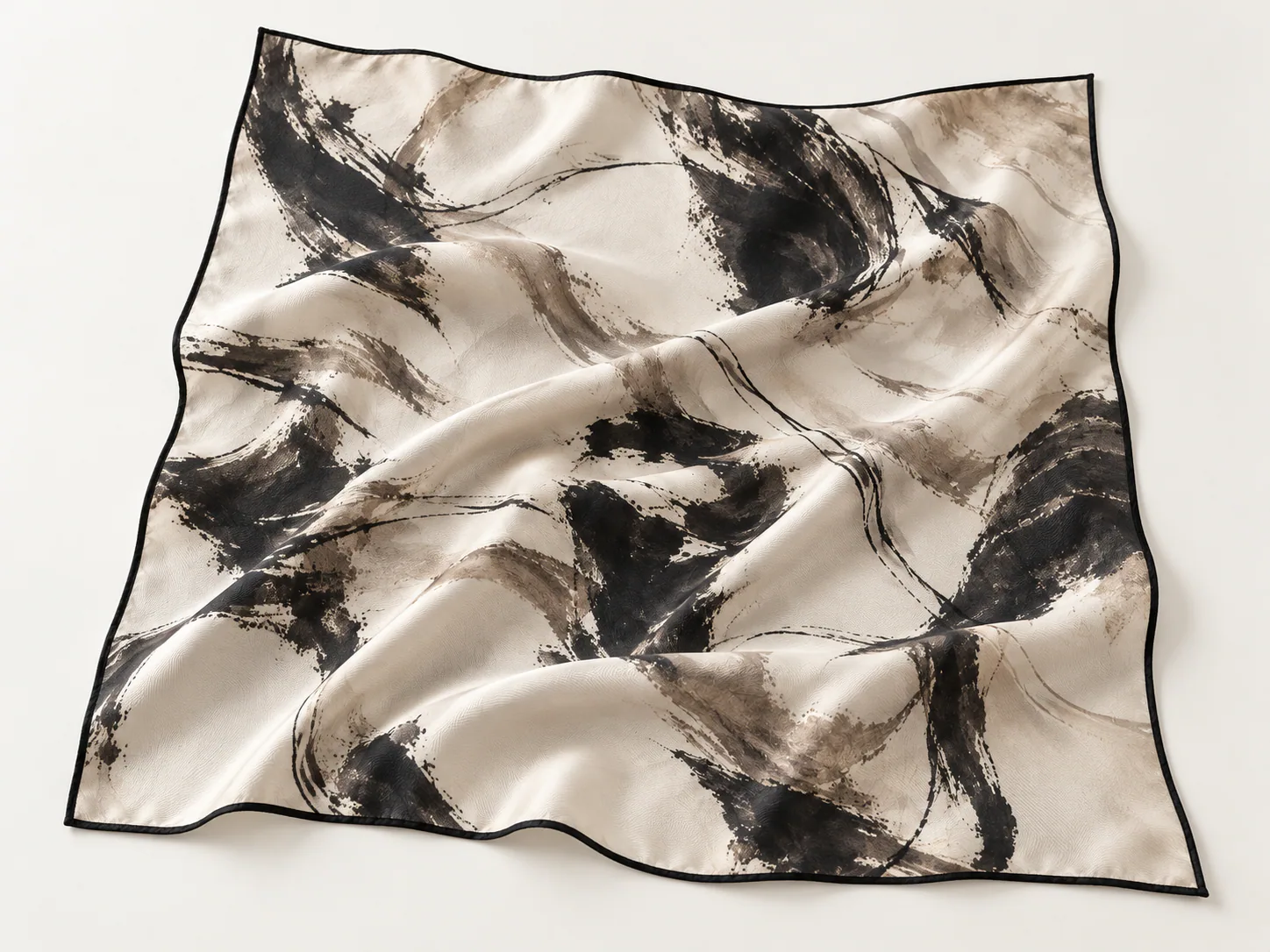
- Finished square with complete printed border
- Artwork shown across a relaxed silk-twill direction
- Narrow finished edge direction
- Actual construction, weight, colour and finish require sample approval
Selectable project range
- 45 × 45 cm / 50 × 50 cm / 53 × 53 cm / 55 × 55 cm / 65 × 65 cm / 70 × 70 cm / 88 × 88 cm / 90 × 90 cm / 100 × 100 cm / 130 × 130 cm nominal square directions
- Artwork scale, repeat, border and logo placement
- Silk construction and momme
- Hand-rolled or machine-hem route
- Care label, hangtag, sleeve or gift box
Material & construction
Specify every surface
and hidden layer.
100% mulberry silk is available as a selected material option. The final fibre declaration belongs to the written product specification.
Silk construction and momme are selected per project and confirmed against the relevant swatch or sample.
- 01
Face and reverse appearance
- 02
Print detail and colour reference
- 03
Finished size, measurement method and tolerance
- 04
Edge width, corners, thread and evenness
Two ways to begin
From artwork.
Or from inspiration.
adapt supplied artwork to the finished square and wearing scale
Start this routebegin with a theme, audience or collection reference and develop the artwork direction
Start this routeBranding, packaging & range extension
Carry one product language
through the presentation.
- Logo placement
- Care or woven label
- Hangtag
- Paper sleeve
- Gift box
Commercial framework
What the quotation needs to fix.
50 pieces
50 pieces per style, per colourway for custom silk and polyester scarves. Different styles or colourways are not automatically combined.
Confirmed per project
Sampling starts once project details are confirmed and the sample fee has been received. The exact sample type, day basis, delivery treatment and schedule are written into the sample brief.
Normally 7–14 days
Bulk production normally takes 7–14 calendar days after final artwork and specifications, sample approval and receipt of the agreed deposit; transport is excluded and the order agreement sets the final schedule.
Related collaboration stories
See how an initial reference
became a resolved direction.
 Selected collaboration
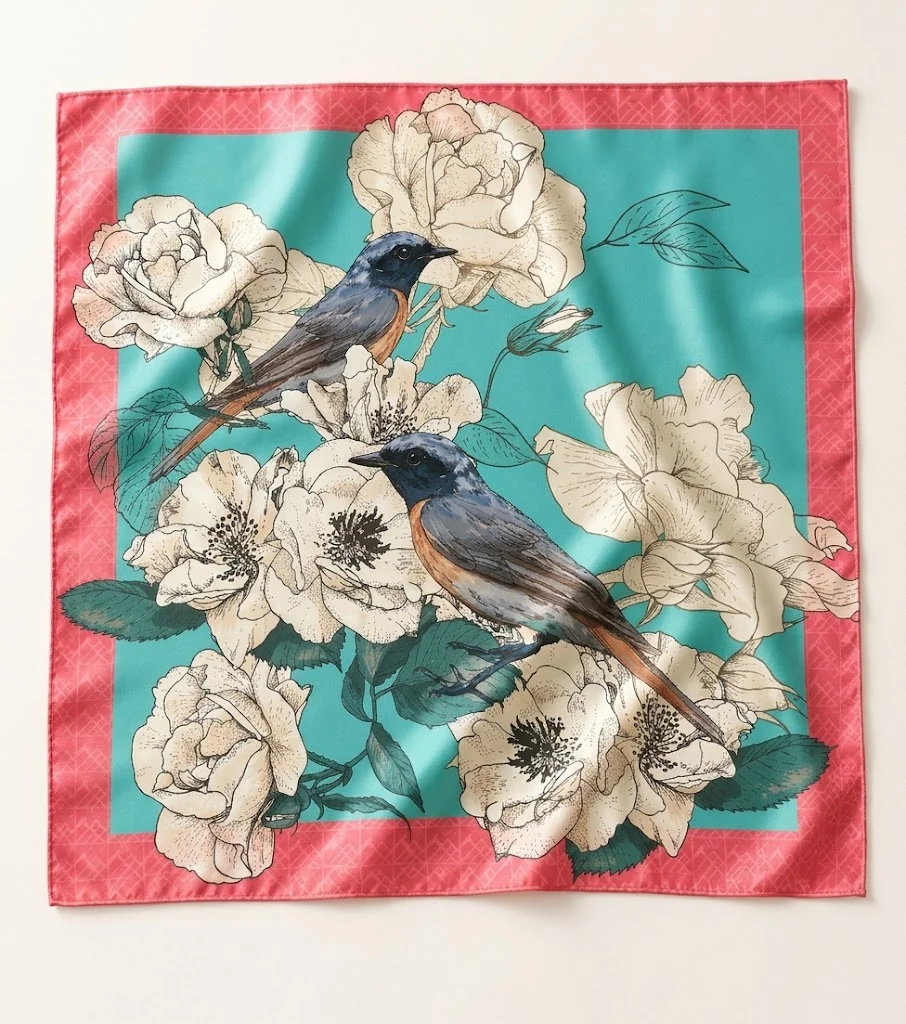
Painted Garden
Development priorities connect colour calibration, fine-line separation, a silk-twill direction and separately approved scarf and accessory samples.
Read the project story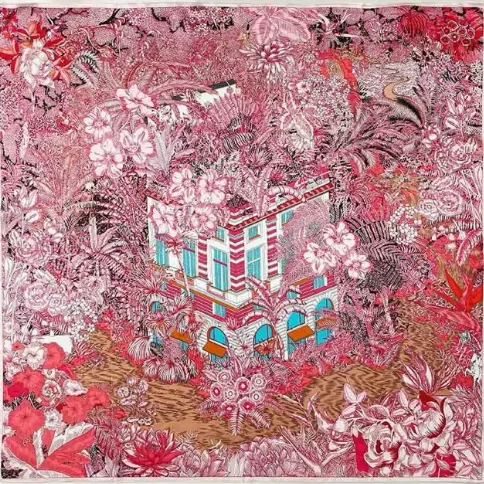 Selected collaboration
Hidden Villa
Layered foliage partially conceals the architecture, allowing atmosphere to arrive first and the villa to emerge on a second look.
Read the project story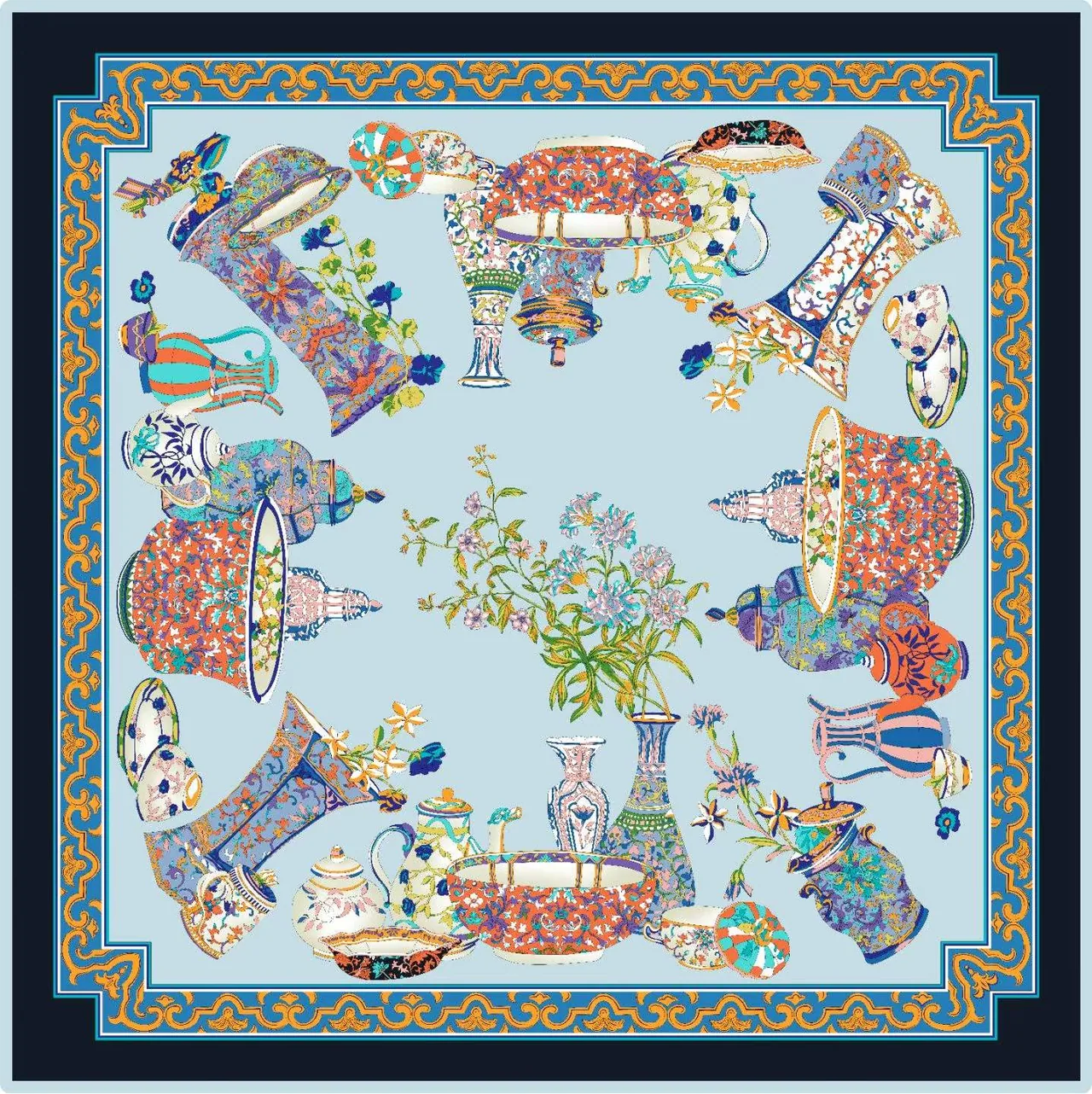 Selected collaboration
Porcelain Rhapsody
Harmonised vessel drawings, branches and circular movement created a surrounding composition with a coherent family of colourways.
Read the project storyBuyer selection guide
Choose, specify and approve the product.
Choose the square around the visible area
A square scarf is usually seen in fragments: a diagonal fold at the neck, one corner in the hair, a small knot at the wrist or a compact panel in a gift set. Start by naming the primary use and the area that must remain recognisable after folding. A 50 × 50 cm direction supports compact neck, hair and pocket uses; 55 × 55 cm adds tying room; 70 × 70 cm gives more coverage and a larger artwork field. These are nominal development directions, not a promise that one artwork file can be scaled unchanged across every size.
Ask for the finished-size definition, measurement method, hem allowance and tolerance in the written specification. The selected material also changes the result: a construction with more body can hold a neat neck shape, while a fluid surface may produce a softer knot. Fibre, construction and weight therefore need separate lines in the quotation and sample record.
Build artwork for folds, borders and corners
Review the complete flat composition and the likely diagonal folds together. Borders that appear balanced when flat may dominate a small neck fold, and a central motif may disappear inside a knot. Mark the intended logo area, critical text, repeat direction and safe area only after the finished template and edge route are agreed. Keep important marks away from the turn-in zone until its width is confirmed.
For multiple sizes, prepare or approve a format-specific layout rather than relying on automatic scaling. Compare motif scale, border depth and logo visibility at actual finished size. A digital fold view is useful for composition planning, but colour, reverse appearance, opacity and drape still require a relevant physical sample.
Specify the commercial unit correctly
The confirmed custom-scarf minimum is 50 pieces per style, per colourway for silk and polyester. If one order contains two artworks or three colourways, list the quantity for each design-colour combination; do not assume the quantities can be pooled. Labels, gift boxes and other packaging components can have separate minimums and should be quoted as their own lines.
For a comparable quotation, record size, declared fibre, construction, weight, print route, edge, label, packaging, quantity split, destination and requested scope. Sampling lead time is confirmed per project and starts once project details are confirmed and the sample fee has been received; the sample type, day basis and delivery treatment belong in the actual brief.
Product FAQ
Before you add it to the brief.
What is the minimum order?
50 pieces per style, per colourway for custom silk and polyester scarves. Different styles or colourways are not automatically combined.
Can one order include several designs?
Yes, it can be quoted as one programme, but quantity, minimum, sample, price and approval remain visible by product, construction, design and colourway. They are not automatically combined.
Should a 50 cm and 70 cm square use the same artwork file?
Use the same creative direction if appropriate, but review a separate finished-size layout for each format. Motif scale, border depth, safe areas and logo visibility can change materially.
Which square is best for a neckerchief?
50 × 50, 55 × 55 and 70 × 70 cm are confirmed nominal directions. Choose by the intended knot, coverage, artwork scale and selected material, then approve the relevant sample.
Can the border run into the hem?
Only after the production template and edge route define the cut, finished outline and turn-in. Protect critical text or logos until those zones are agreed.
Can several colourways share one order?
They can sit in one project, but the confirmed custom minimum applies per style, per colourway. Quote each colourway quantity separately.
Compare scarf formats
One collection language.
Different proportions.
Move between formats without assuming that artwork, dimensions or construction can be copied unchanged.
 Large square
 & headwrap
88 × 88 cm · 90 × 90 cm · 100 × 100 cm · 130 × 130 cm
Review this format ↗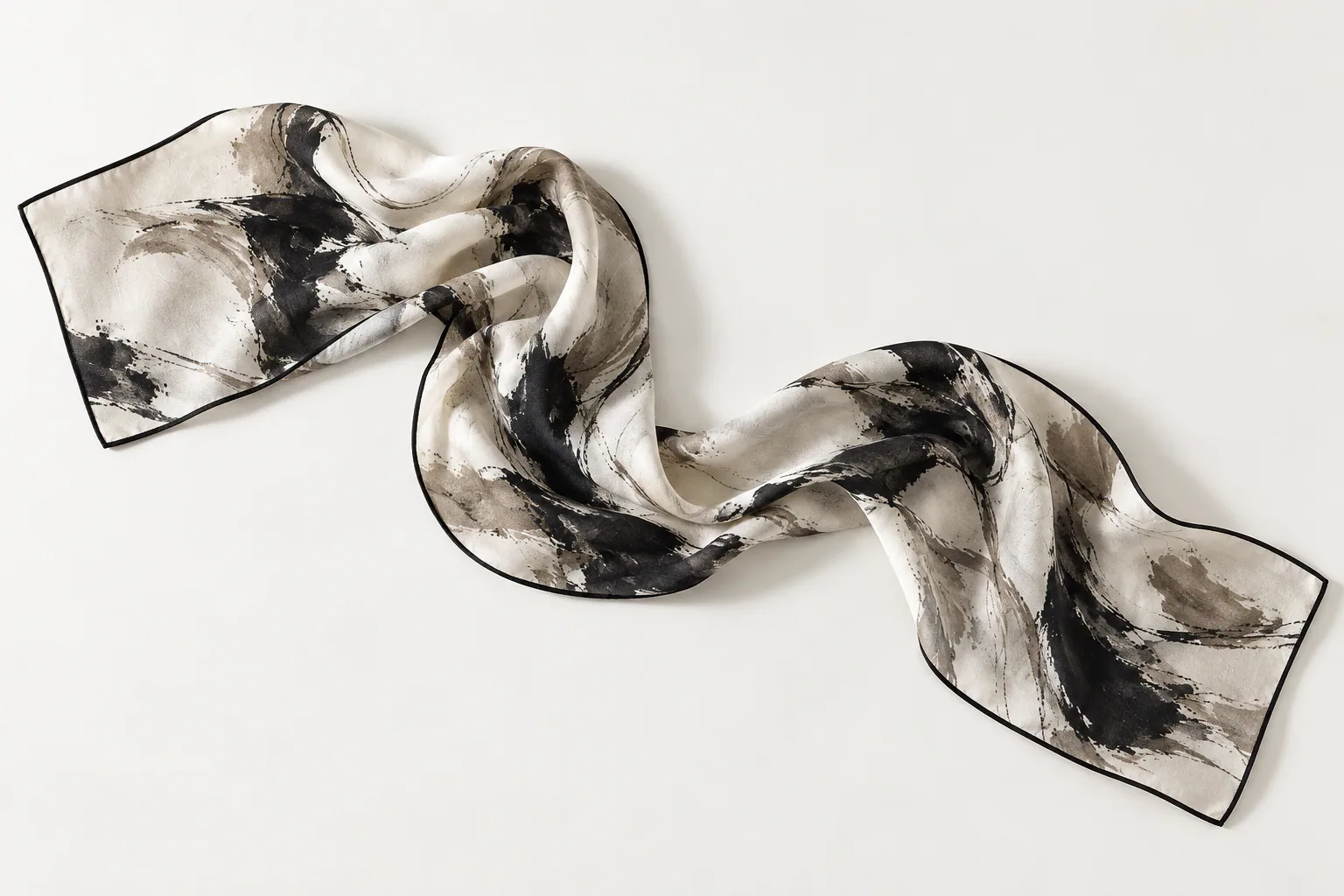 Long / wrap
Long scarf, shawl & wrap
110 × 42 cm · 130 × 170 cm · 180 × 70 cm · 200 × 65 cm · 70 × 180 cm
Review this format ↗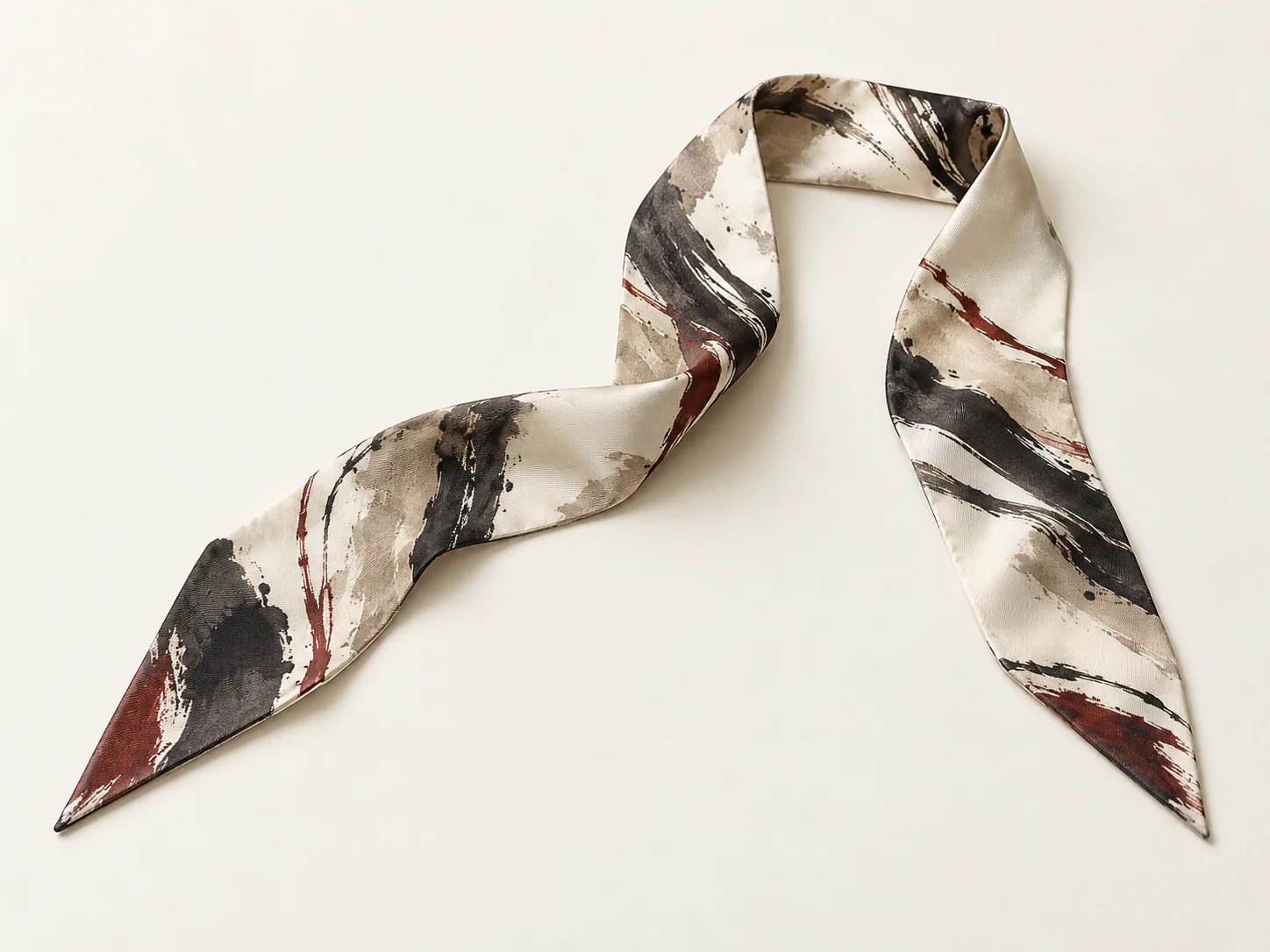 Narrow
Twilly & bag-handle ribbon
5 × 70 cm · 5 × 86 cm · 5 × 90 cm · 5 × 100 cm · 6 × 120 cm · 5.5 × 120 cm
Review this format ↗