Direct answer
Start with the decision, then verify the specification.
Neither material is an absolute winner. Silk can make sense when a premium brand presentation justifies its purchase and care requirements. Polyester can be practical when frequent wear, straightforward maintenance and scalable replacement matter more. The right choice depends on brand expectations, comfort, cleaning responsibility, budget, customization and replenishment—not the fibre name alone.
Buyer scenario
Why this question changes the order.
For airline uniform scarves and hotel uniform scarves, buy the finished specification rather than a material stereotype. A beautiful scarf that cannot follow the staff cleaning routine is a poor operational choice. An inexpensive scarf that loses its intended appearance or becomes uncomfortable is not necessarily economical.
Understanding Silk and Polyester
Silk is a natural protein fibre produced by silkworms. Polyester is a manufactured polymer fibre; conventional textile polyester is commonly polyethylene terephthalate. Their different chemistry affects moisture absorption and processing, but the yarn, fabric construction and finishing also shape the finished scarf. Canadian Conservation Institute
Keep the categories separate: silk and polyester name fibres; satin and twill name weave structures. Chiffon describes a lightweight, sheer fabric type, not a fibre. Compare silk twill with polyester twill, or silk satin with polyester satin, before attributing every difference to composition. A cross-construction comparison may still be useful, but it answers a different question.
Silk twill can be considered for a textured, controlled uniform fold; silk satin for a smoother, more lustrous presentation. Polyester versions offer different surface and drape options. Chiffon may suit a light decorative accessory, but sheerness and knot volume must fit the uniform. These are sample directions, not guarantees about every fabric carrying those names.
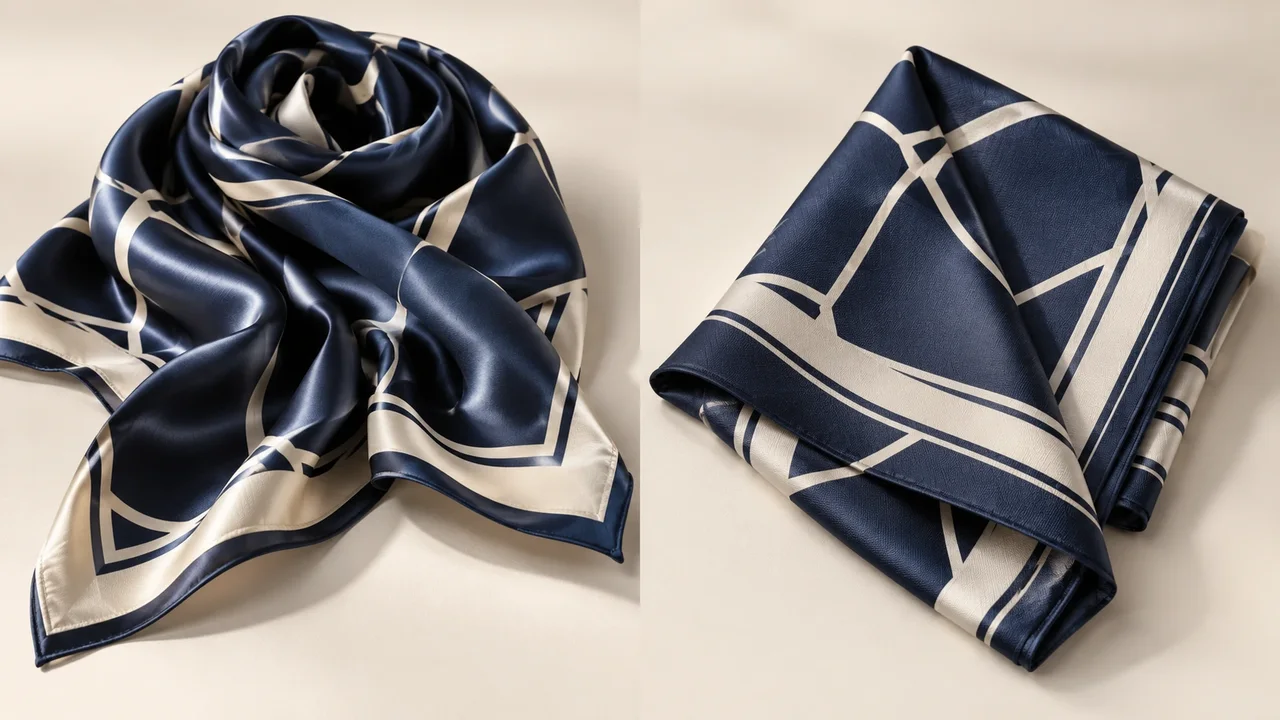
Silk vs Polyester Scarves Comparison
The matrix describes tendencies and questions to test, not fixed quality rankings. Compare candidates with the same intended size, wearing method and care conditions. For breathable comfort, distinguish air passage, water-vapour transfer and moisture uptake; none can be inferred reliably from a fibre label alone.
| Comparison Factor | Silk | Polyester | Procurement Implication |
|---|---|---|---|
| Appearance | Lustre varies with yarn and weave. | Available in matte or lustrous constructions. | Review both beside the uniform under working light. |
| Texture and Hand Feel | Can feel smooth or more textured. | Hand varies widely with yarn and finish. | Handle finished samples rather than judging photographs. |
| Breathability | Fabric openness matters, not just fibre. | Density and finishing can restrict or permit airflow. | Compare actual constructions; do not equate absorbency with airflow. |
| Moisture Management | Fibre takes up more moisture than conventional polyester. | Low fibre absorbency; engineered transport depends on construction or finish. | Evaluate damp feel, drying and comfort in the intended knot. |
| Wearing Comfort | Weight, edge and fold influence neck contact. | Smoothness, cling and knot bulk need assessment. | Include different wearers and the complete uniform. |
| Wrinkle Resistance | Folding and moisture can leave creases. | Often selected for crease recovery, but still can crease. | Check appearance after storage, wearing and approved cleaning. |
| Color Reproduction | Colour depends on dye route and surface. | Colour depends on ink, substrate and fixation. | Approve separate printed references for each fibre. |
| Printing Compatibility | Acid or suitable reactive routes may be used. | Disperse routes, including appropriate sublimation, may be used. | Ask for the actual ink and fixation process. |
| Shape Retention | Bias, edge and care affect dimensions. | Stability depends on construction and processing. | Measure the scarf before and after the planned care trial. |
| Durability | Snagging and repeated knotting need review. | Fibre robustness does not prevent fabric or hem damage. | Inspect the first unacceptable failure, not just fibre strength. |
| Care Requirements | May require a gentle or professional route. | May permit easier care, subject to the finished article. | Obtain instructions covering print, hem and labels together. |
| Maintenance Cost | Care handling may add time or service charges. | Savings depend on an approved workable routine. | Cost the actual process, not a generic dry-cleaning assumption. |
| Material Cost | Often a higher purchase-cost direction. | Often a lower-cost direction, with quality variation. | Request current matched-specification quotations; assume no price ratio. |
| Bulk Production Suitability | Scale depends on material, finishing and approvals. | Scale likewise depends on the production route. | Confirm capacity, lot consistency and replenishment terms in writing. |
| Brand Presentation | Can support a natural-fibre premium narrative. | Can support a refined uniform through design and execution. | Test the brand impression without using composition as a quality score. |
| Repeat-Order Control | Material and print references must be retained. | Material and print references must also be retained. | Agree substitutions, colour acceptance and retained-sample ownership. |
Fibre moisture behaviour is described in The Chemistry of Textile Fibres. General wrinkle and absorbency tendencies appear in UGA Extension's fibre overview; neither source constitutes a performance report for a proposed scarf.
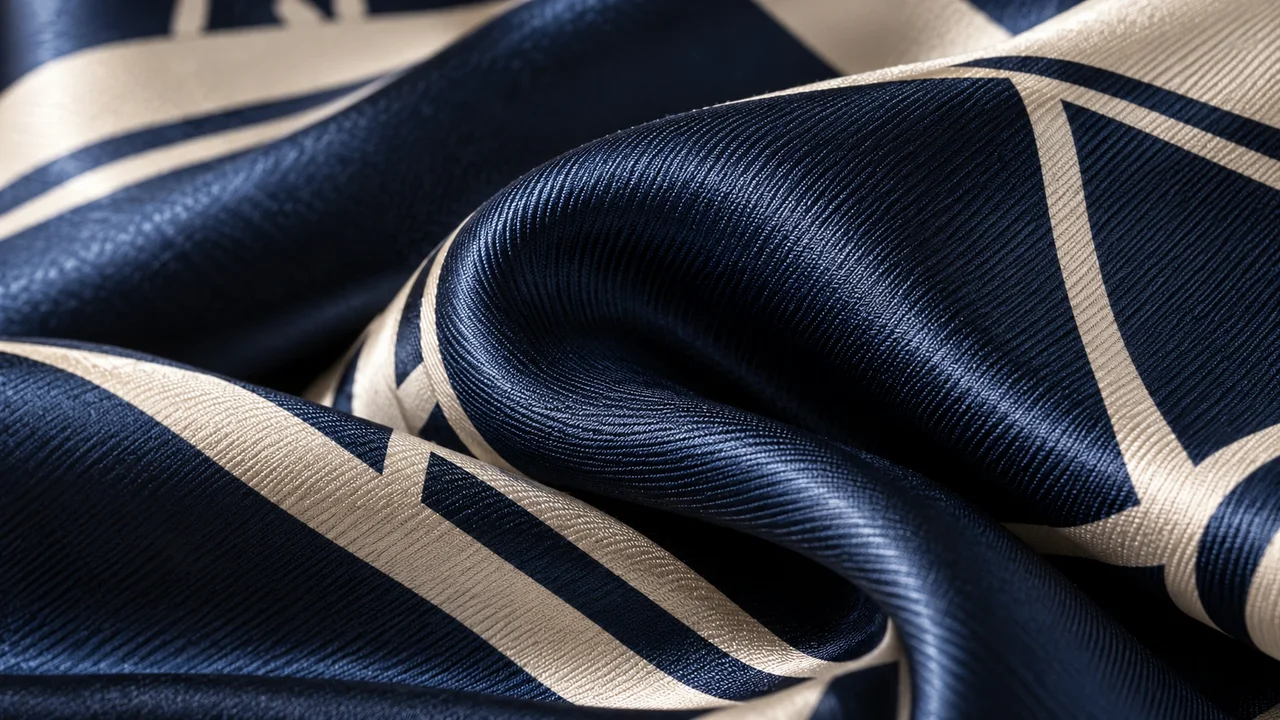
Choosing an Airline Scarf Material
Cabin Crew and Long Shifts
For cabin crew, assess the scarf while sitting, reaching and moving through service tasks. Record pressure at the neck, repeated adjustments, knot movement and whether the accessory interferes with the uniform. A sample viewed briefly on a desk cannot answer these questions.
Silk uniform scarves can be reasonable when their hand and appearance satisfy the crew and a feasible care routine is available. Polyester uniform scarves can be practical when repeated use and replacement logistics dominate, provided the selected construction remains comfortable. Test both over representative shifts; avoid calling silk automatically cooler or polyester automatically uncomfortable.
Ground Staff and Replacement Planning
Ground staff roles may combine indoor desks, boarding areas and outdoor movement. Define the actual environment rather than treating all staff as one use case. Include scarves stored in lockers or travel bags when reviewing crease recovery and presentation.
Plan spare issues, cleaning turnaround and replacement availability alongside the initial order. If staff clean at home, check whether the proposed instructions are realistic. If a contractor cleans uniforms, obtain their acceptance of the finished accessory. Neither fibre removes the need for this operational agreement.
Premium Branding and Daily Maintenance
A premium airline may choose silk for a designated service or presentation role, but that choice needs a funded maintenance plan. A refined polyester design can also support an airline identity. Approve the visible logo, border and colours in the prescribed fold, not only when the scarf lies flat. These are selection options, not claims about what all airlines currently wear.
Choosing a Hotel Scarf Fabric
Luxury and Boutique Hotels
For front-desk, guest-relations and concierge teams, the accessory should coordinate with the jacket, shirt, name badge and lighting. Silk may suit a luxury hotel when its appearance is part of the intended guest experience and the property can support its care requirements. Polyester remains a viable candidate if the approved sample delivers the required presentation.
A boutique property can prioritize a distinctive print without choosing a particular fibre in advance. Examine how much artwork remains visible in the daily tie and whether that tie is simple enough for consistent staff use. The specification should serve the role rather than a product photograph.
Business Hotels and Large Groups
Business hotels may place greater weight on cleaning convenience and quick replacement. For large groups, assess branch distribution, staff turnover, reorder sizes and the administration of multiple colourways. Polyester can be a practical starting candidate, but group scale does not establish washability, low cost or uniform quality by itself.
Standardize the approved material and colour reference across properties. If different roles need different fabrics, treat them as separate product lines with coordinated appearance. Require approval before substituting a supposedly equivalent hotel scarf fabric; a changed finish can affect the uniform even when the fibre name stays the same.
Custom Printing and Brand Color Consistency
Both fibres can support custom printed uniform scarves, but digital printing describes how a design is applied, not one universal ink chemistry. Logos, fine lettering and repeated motifs need review on the chosen substrate and in the final wearing fold.
For silk, acid-dye printing and suitable reactive-dye systems are established options. Mimaki's acid and reactive ink information identify silk-compatible applications; compatibility remains specific to the ink formulation, fabric preparation and process.
Polyester commonly uses disperse dyes. Transfer dye sublimation is a relevant route for suitable white or light-coloured polyester substrates, while direct disperse printing follows a different processing sequence. Epson's printing primer describes the transfer route; Mimaki's disperse information describes a direct route requiring fixation and washing. Do not assume a silk workflow and a polyester workflow are interchangeable, or that any method guarantees durable colour.
Use the brand's Pantone references or physical colour samples as targets, then sign an actual printed strike-off and finished scarf. Specify viewing conditions and any instrumental colour acceptance method with the supplier. Assess the uniform ensemble under relevant lighting. A target code is not a promise of zero colour difference.
For reorders, retain the approved scarf, artwork revision, fabric identity and process record. Agree what happens when the original substrate or ink is unavailable. Check new production against the retained reference rather than an old screen image. See the print-colour approval guide.
Total Cost of Ownership
Use this framework: Initial Purchase + Maintenance + Replacement + Related Operational Costs. It is an analysis method, not a claim that either material saves a stated amount.
Purchase includes development, sampling, printing, finishing, labels, packaging and landed delivery. Maintenance includes the agreed wash or professional-cleaning charge, handling labour and finishing time. Replacement includes damaged, lost or visually unacceptable pieces and the cost of small replenishment orders.
Related operational costs include storage, spare inventory, distribution across properties or bases, colour reapproval, supplier administration and delivery disruption. Ask who pays for and performs each activity. If cleaners reject a scarf's care requirements, include the alternative process before comparing offers.
Keep workforce size, issue quantity, usage pattern and evaluation period consistent. Use quotations and observed trial records for inputs, showing uncertain assumptions separately. Divide comparable programme costs by accepted service use only when credible use records exist. A low unit price alone cannot establish lower total cost; use the quotation comparison guide to align scope.
Sustainability Is a Lifecycle Decision
Natural origin does not make a silk scarf impact-free. Mulberry cultivation, silkworm rearing and silk-yarn processing form part of its production chain; manufacturing energy, dyeing and care also belong in the assessment. A Philippine Textile Research Institute LCA presentation identifies these production stages. Its particular system is not a footprint for every finished scarf.
Conventional polyester generally uses fossil-derived feedstock. Suitable durability can support longer use, but synthetic textiles can release microplastic fibres during manufacture, wearing and cleaning. The European Environment Agency describes these release pathways; no shedding rate is assumed for the proposed product.
Recycled content and future recyclability are different questions. Ask about feedstock traceability, fabric blends, coatings, collection arrangements and an actual recycling route. Textile Exchange distinguishes existing bottle-based feedstocks from the development of textile-to-textile systems. Avoid calling silk always sustainable, polyester always harmful, or a recycled scarf automatically recyclable.
For hospitality uniform accessories, choose a workable care plan, avoid unnecessary variants and plan useful replacement stock. Compare environmental information with equivalent product functions and boundaries; do not substitute a generic fibre score for a documented programme decision.
Uniform Scarf Material Selection Checklist
Before approving corporate uniform scarves, answer these questions in the brief:
- What brand impression must the scarf deliver, beside which uniform components?
- Which roles wear it, for how long, in what climate and wearing fold?
- What did wearers report about neck contact, knot stability, heat and adjustment?
- How frequently will scarves be cleaned, and who performs and pays for cleaning?
- Does the contractor or home-care routine match the finished article's instructions?
- What budget covers purchase, care, spares, distribution and replenishment together?
- Which fibre, weave or fabric type, weight, dimensions, hem and label are approved?
- Which logo placement, repeat scale and colours must remain visible when worn?
- What target service period and replacement triggers will the programme use?
- Who retains colour samples, and how will a new batch or substitution be approved?
Document the actual wash, drying and finishing trial. Inspect colour change, staining onto other textiles, dimensions, knot behaviour and edge condition. Select laboratory methods and acceptance criteria with a competent lab where required: ISO 105-C06 concerns laundering colourfastness, while ISO 105-E04 concerns perspiration. Their titles are not certificates of scarf quality or universal airline requirements.
Do not put the accessory into a hotel's hot linen or bleaching process merely because it is polyester. Follow the finished scarf's care instructions. GINETEX makes clear that ironing temperature follows the care label rather than fibre content alone. Silk also needs protection from unsuitable chemistry and handling; CCI's natural-fibre guidance identifies relevant vulnerabilities, not a uniform laundering recipe.
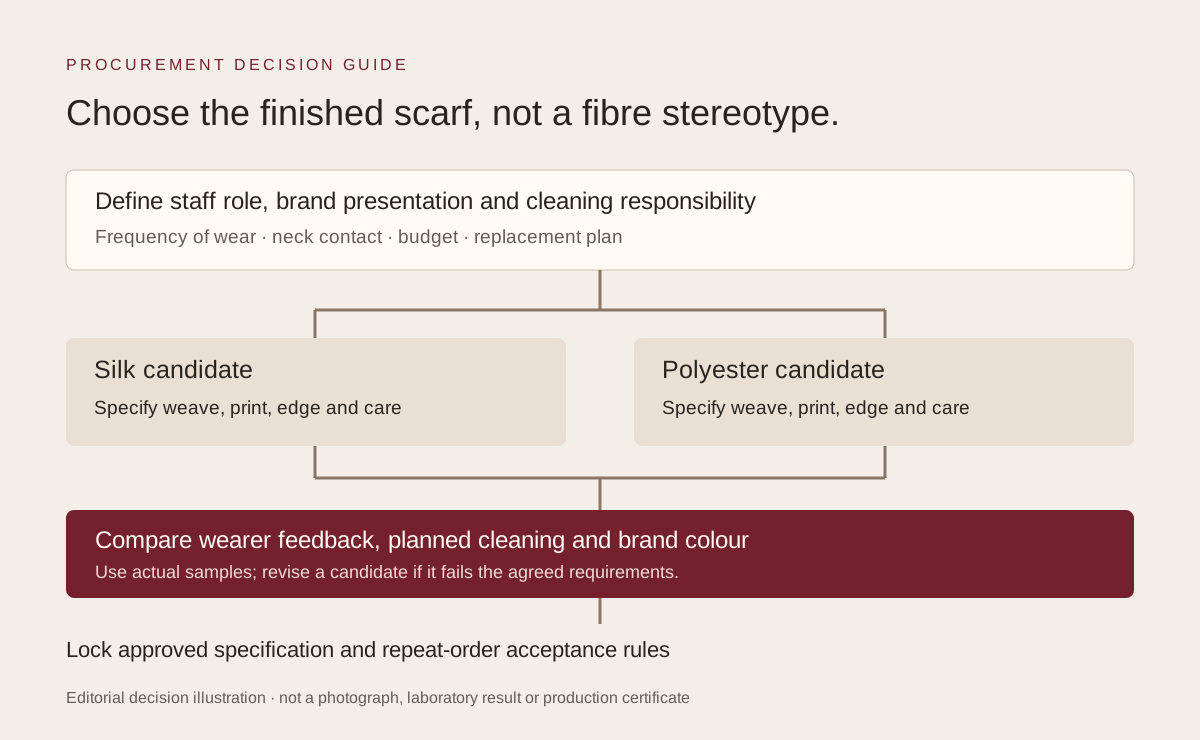
Our Recommendation
Premium Airline: shortlist silk when its presentation is valued and the care plan is practical; keep a well-specified polyester candidate for comparison. High-Frequency Staff: start with polyester where maintenance compatibility and regular replacement dominate, then verify comfort and print performance.
Luxury Hotel: shortlist silk for an elevated guest-facing presentation when laundering responsibility and replacement budget are clear. Large-Scale Hospitality: start with a polyester specification that can be standardized across properties, without sacrificing the approved finish or colour reference.
These are starting points, not material verdicts. Make the final choice using real samples, representative wearer feedback and the intended wash or professional-care trial. For custom airline scarves and custom hotel scarves, lock the complete specification and reorder standard before expanding the order.
Frequently Asked Questions
Which material is better for airline uniform scarves?
Neither is universally better. Silk can support premium presentation with suitable care; polyester can support frequent wear and replacement planning. Test the actual scarf with the uniform, crew roles and maintenance process.
Is polyester suitable for a luxury hotel?
Yes, if its approved hand, drape, printing and finishing meet the hotel's presentation standard. Synthetic composition does not prevent a refined result, but a product photograph cannot establish that result.
Which material is easier to care for?
Polyester is often the easier-care candidate, but the finished scarf's instructions decide. Print, hem, labels and finish can restrict cleaning. Silk is not automatically dry-clean-only, and polyester is not automatically suitable for industrial laundry.
Is silk always more comfortable?
No. Silk's moisture uptake differs from polyester's, but comfort also depends on construction, weight, finish, edge and knot. Compare samples over representative shifts rather than making a fibre-only promise.
Which material should we choose for logo printing?
Either may work with a compatible process. Review fine details and colour on the actual fabric. Confirm the ink route, fixation, reverse appearance and performance after the planned care trial before approving the logo.
How should we compare the costs?
Compare matched specifications and the same staffing and usage assumptions. Include initial purchase, maintenance, replacement and operational costs. Use current quotes and trial observations; do not assume a fixed material price or saving percentage.
Can polyester scarves look premium?
Yes. A suitable surface, controlled drape, thoughtful artwork and clean finishing can support premium presentation. Agree what premium means with a physical reference, then inspect production against it.
What should we check before ordering?
Confirm composition, construction, dimensions, print process, signed colour samples, edge and care instructions. Agree quantity lines, delivery assumptions, replacement arrangements and reorder acceptance. Review the finished sample with wearers and the cleaning provider.
Primary references
Sources used for technical context
These sources support the general technical or regulatory context. They do not prove SCARFTEX capability, certification or the specification of a particular order.
- Caring for textiles and costumesCanadian Conservation Institute, Government of Canada
Silkworm-produced protein fibre, polyester identity, basic weave structures and the effect of fabric/finishing on appearance.
- The Scope of Textile Fibres, The Chemistry of Textile FibresRoyal Society of Chemistry
Moisture regain distinguishes fibre water uptake; fibre geometry and fabric assembly affect appearance.
- Fiber TypesUniversity of Georgia Cooperative Extension
General moisture absorbency, crease recovery and heat-sensitivity tendencies in fibre groups.
- Acid dye inkMimaki
A manufacturer's acid textile inks support silk applications.
- Reactive dye inkMimaki
Specific reactive ink systems identify silk as an application.
- Primer: 3 Methods of Digital Textile PrintingEpson
Transfer sublimation uses a compatible polyester substrate and heat transfer; preparation and post-treatment vary by textile printing route.
- Disperse dye inkMimaki
Direct disperse printing on polyester; the described system requires fixation and washing.
- ISO 105-C06:2010International Organization for Standardization
Scope concerns colour resistance to domestic and commercial laundering.
- ISO 105-E04:2013International Organization for Standardization
Scope concerns colourfastness to human perspiration.
- TELACon 2025 LCA Silk Yarn presentationPhilippine Textile Research Institute, Department of Science and Technology
The model identifies mulberry cultivation, silkworm rearing and silk-yarn production stages.
- Microplastics from textiles: towards a circular economy for textiles in EuropeEuropean Environment Agency
Synthetic fibres can be released throughout production, wearing, washing and disposal; release is affected by textile parameters.
- The Future of SyntheticsTextile Exchange
Virgin fossil feedstocks, current bottle-based recycling and the need to develop textile-to-textile systems are separate issues.
- Care SymbolsGINETEX
Finished-article care instructions, and ironing treatment based on care label rather than fibre name alone.
- Natural Fibres, CCI Notes 13/11Canadian Conservation Institute, Government of Canada
Silk is vulnerable to certain chemistry, heat/moisture and light conditions.