Direct answer
Start with the decision, then verify the specification.
Treat odour after unpacking as an observable product-and-pack condition, not as a vague request for ‘no chemical smell’. Define when and how the assessment is made: immediately after opening, after a stated airing period, or both; by whom; under what room and packaging conditions; and what reference or acceptance language applies. Investigate material, print, finishing, washing-off, drying, contamination, moisture, storage, individual bags, tissue, boxes and cartons as separate possible contributors. Do not add perfume to conceal the issue. Use a sealed-pack sample and retain components for comparison. If laboratory or certification evidence is required, confirm the exact method and article with a qualified provider. Website claims should never imply universal odour performance or certification without current product-specific evidence.
Buyer scenario
Why this question changes the order.
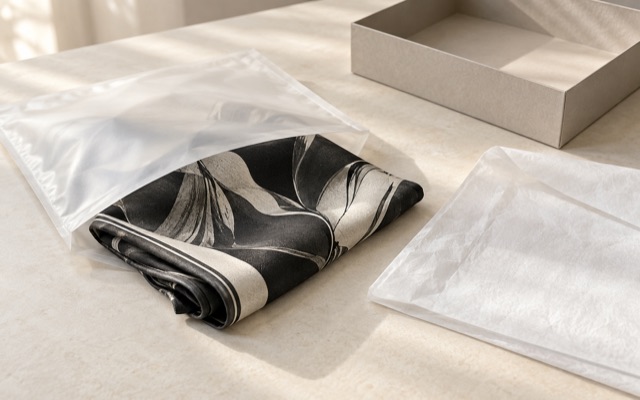
A retailer receives individually bagged scarves and opens the first carton in a small stockroom. A strong unfamiliar smell escapes from the bags, even though the approved unbagged sample had seemed normal weeks earlier. The product team cannot tell whether the source is the textile, printing and finishing, residual moisture, the bag, tissue, box or storage environment because those components were never evaluated together. A controlled pack-out approval would have preserved samples of each component and established an opening-time and airing-time check before shipment.
Describe the observation before guessing the cause
Record which product, colourway, lot, carton and packaging combination was opened; how long it had been sealed; the room condition; and when the odour was noticed. Use neutral descriptive language such as solvent-like, musty, oily, perfumed or unknown only as an observation, not a diagnosis. Ask more than one trained or agreed reviewer where practical and note whether the odour changes after a defined airing interval.
A single person's tolerance varies, so the acceptance process should not depend on an undocumented reaction at the warehouse door. At the same time, the buyer should not dismiss a strong complaint because another person notices less. A repeatable opening protocol, retained samples and component comparison create a path to investigation. Health or chemical-safety concerns require qualified advice and appropriate testing rather than smell-based reassurance.
Trace textile and process contributors
Potential contributors may include base material storage, oils or auxiliaries, printing and fixation, washing-off, finishing, incomplete drying, cleaning agents or contamination. The same visible product can behave differently after a process change or prolonged sealing. Ask the production team to identify the material and process lot associated with the affected goods and compare it with retained references, but do not publish an unverified root cause.
If a smell appears only after the textile is damp, separate that observation from dry retail opening. If it appears immediately in sealed goods and fades after airing, record both stages. Neither pattern alone proves safety or acceptability. The investigation should follow the product history and any applicable chemical or certification requirements. A factory statement that material is ‘eco-friendly’ is not evidence that the specific odour has been identified or controlled.
Test the packaging components separately and together
Individual polybags, printed pouches, tissue, adhesives, foam, inserts, boxes and cartons can each carry or trap odour. Request component samples before final approval and place the selected scarf inside the complete pack for a realistic sealed dwell. Keep control samples of the scarf and components unsealed where practical. If the odour appears only in the assembled pack, compare combinations systematically instead of changing every component at once.
Moisture control deserves special attention because sealed packing can preserve conditions created earlier in the process. Confirm that goods are suitably dry before packing and that cartons are stored away from contamination. Any desiccant or protective material must be appropriate, correctly specified and safely handled for the product and destination. Do not add a moisture-control component as an improvised fix without reviewing packaging, handling and market requirements.
Choose a meaningful assessment route
There is no universal consumer phrase that functions as a test method. A project may use a documented sensory panel or another agreed procedure, and chemical analysis may be needed if a specific substance is suspected. ISO 17299 concerns determination of deodorant properties—how textiles reduce defined odour chemicals—and should not be misrepresented as a general pass/fail method for every new-product smell. The exact business question must guide method selection.
OEKO-TEX STANDARD 100 testing methods provide useful context: its published procedure describes an initial sensory odour assessment and identifies certain non-product-typical odours or masking perfumes as concerns in that certification system. That does not prove a scarf is certified, nor does it establish a standalone SCARFTEX specification. If certification is commercially required, request the current certificate scope and product connection; if testing is required, agree the laboratory, method and report before production release.
Write timing and acceptance into the pack-out approval
A practical specification can require review immediately after opening and again after a defined airing time. It should state the sealed dwell used for sample approval, pack components, reviewer, environment, descriptive scale or limit, and action if the condition falls outside the agreement. The acceptance language must be realistic and understandable; ‘zero odour’ is difficult to apply without a defined method and detection basis.
Carry the approved pack-out into bulk inspection. Select cartons and individually packed units according to the inspection plan, identify samples and record opening observations. If an issue is found, hold the relevant lot while product and packaging components are investigated. Masking with perfume, repacking without root-cause review or airing only the inspection sample can conceal the condition rather than control it.
Create a proportionate investigation record
The record does not need to be elaborate, but it should preserve enough information to reproduce the observation. Include photographs of packaging and identifiers, people involved, time opened, time rechecked, descriptive notes, affected quantity and comparison samples. Keep claims such as ‘all cartons affected’ separate from the number actually opened. If a third-party laboratory or adviser becomes involved, share the product and packing history rather than only a small anonymous swatch.
Corrective action should be confirmed on a new sealed sample. Airing loose scarves may show that odour fades, but it does not prove that the unchanged production and pack-out route will deliver a better opening experience. Likewise, changing the bag without reviewing the textile may move rather than remove the cause. Close the investigation by naming the revised component or process, approval result, effective lot and any remaining limitation.
Keep odour separate from unsupported safety conclusions
A strong or unusual smell can trigger a legitimate quality review, but smell alone does not identify a substance or quantify exposure. Avoid statements that the product is safe because the odour fades, or unsafe because the odour is noticeable. If there is a regulatory, chemical-restriction or health concern, consult an appropriate laboratory or professional and define the substances, product class and destination-market requirements to be evaluated.
Similarly, an absence of noticeable odour is not a certificate of chemical compliance. Restricted-substance testing, certification scope and sensory pack-out acceptance are different evidence layers. A buyer may need one, several or none depending on market and product. Keep their records separate so a passed sensory check is not presented as a broad harmful-substance result and a material certificate is not presented as proof of the final sealed-pack experience.
Customer-facing care advice should remain conservative and product-specific. Do not suggest aggressive washing, solvents, heat or home deodorising methods without validated instructions for the exact fibre, colour and finish. If an end customer reports odour, ask for product code, purchase context, pack condition and care history, then route the case through the brand's quality process. Public forum remedies are evidence of frustration, not approved treatment instructions.
Buyer checklist for odour after unpacking
Review checklist
- Define immediate-opening and post-airing review times for the finished retail pack.
- Identify product, colourway, lot, carton, sealing date and storage condition.
- Retain textile, bag, tissue, insert, box and carton samples for comparison.
- Confirm goods are suitably dry and protected from contamination before sealing.
- Use neutral observation language and avoid diagnosing a chemical by smell alone.
- Do not use fragrance or perfume to mask a production or storage odour.
- Confirm any laboratory method, certification scope and acceptance rule in writing.
- Build the same sealed-pack check into sample approval and pre-shipment inspection.
Primary references
Sources used for technical context
These sources support the general technical or regulatory context. They do not prove SCARFTEX capability, certification or the specification of a particular order.
- ISO 17299-1:2014 — Determination of deodorant property: General principleInternational Organization for Standardization
Provides context for defined deodorant-property testing; it is not a universal new-product odour limit.
- OEKO-TEX STANDARD 100 Testing MethodsOEKO-TEX Service GmbH
Includes the certification system's sensory odour screening context; it does not prove certification of any SCARFTEX product.