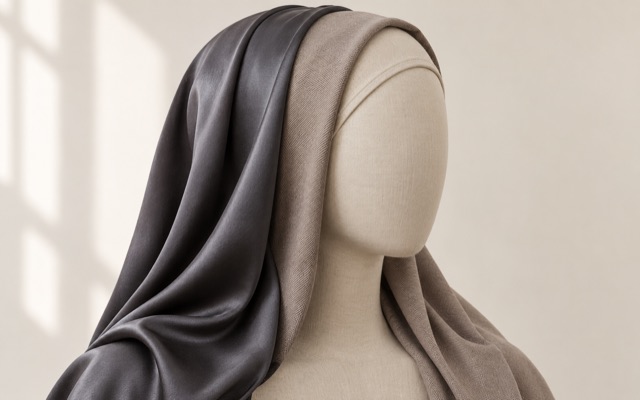
Direct answer
Start with the decision, then verify the specification.
A headscarf that slips is not solved by size alone. Holding behaviour depends on fibre, weave, surface friction and roughness, weight, stiffness, dimensions, fold count, hair or undercap surface, pins or magnets, styling method, climate and movement. Define the wearer and priority style first, then compare representative finished samples in use. A glossy satin may meet a lustre and hair-contact objective while needing a different undercap, fastening or construction strategy; a higher-friction option may hold more readily but change drape, heat, opacity or hand feel. Treat coverage, security, comfort and appearance as separate review criteria, and do not publish a universal ‘non-slip’ claim from one wearer. The approved route should be tied to material code, dimensions, finish and a documented wear protocol.
Buyer scenario
Why this question changes the order.
A modest-fashion brand develops a large printed square because the flat dimensions appear to provide enough coverage. In wear, the selected smooth fabric migrates backward on fine hair, the front edge needs repeated adjustment and extra pins distort the border. The problem is reported as ‘make it larger’, but more area may add weight and bulk without improving grip. A better development round compares two constructions, the intended undercap and fastening options in the priority wrap, then records coverage and movement separately.
Define the wearer system, not only the scarf
The same scarf can behave differently on uncovered hair, a cotton undercap, a satin-lined cap or another scarf. Hair texture, volume and styling change the support surface. Pins, magnets and clips add local holding points, while tying direction and fold count redistribute weight. The brief should therefore describe the intended wearer setup and whether the product must work without an undercap or fastening. Avoid turning one preferred styling method into a universal assumption.
Public wearer discussions repeatedly describe the compromise: smooth satin or chiffon can feel desirable yet move, while grippier bands, cotton outer surfaces, deeper caps, ties, magnets or different wrapping methods can improve security for some users. These accounts identify design questions, not verified solutions for every wearer. A brand should recruit representative fit reviewers and state which setup each sample was tested with.
Treat friction as one variable among several
Textile friction and surface roughness can be measured, and research using fabric-skin systems shows that different fabrics and moisture conditions produce different friction behaviour. The practical lesson is not that one fibre always grips and another always slips. Construction, surface, humidity and the contacting material all matter. A smooth polyester satin and a plain silk sample, for example, may have different structures and measured surfaces even when both are described casually as silky.
Ask the material supplier for a clear construction and finish description, then compare swatches and finished scarves. If laboratory surface data is commercially important, define the method and counter-surface with a specialist; a coefficient without test conditions is not a buyer-friendly product promise. For most development projects, a controlled side-by-side wear assessment with the actual undercap or hair-contact route is the first useful step.
Balance coverage, mass, opacity and movement
More area can improve coverage in one style but also add mass, knot volume and pull. A lighter fabric may drape closely yet become more transparent or shift under movement; a heavier fabric may feel secure in one wrap but become hot or bulky in another. Opacity can also depend on colour, print, fold and lighting. Define minimum coverage zones and the priority fold before selecting dimensions.
Create a comparison matrix for size, finished weight, opacity, edge, front-to-reverse appearance, drape and slip observations. Photograph the same front, side and back views after initial styling and after a stated wear interval. Record whether movement exposes hair or neck, changes the face frame, loosens the knot or simply creates a harmless soft shift. This turns ‘it slips’ into an observable development note.
Build a repeatable wear protocol
Define the style steps, fold direction, undercap, fasteners, wearer group, duration and movements to be included. A protocol might include walking, sitting, turning the head and wearing an outer layer or bag if those are relevant. It should avoid unsafe or uncomfortable fastening and should allow reviewers to report heat, pressure and hairline tension as well as movement. The purpose is product comparison, not forcing the scarf to remain fixed at any cost.
Use more than one reviewer where the product is intended for a broad audience and record individual differences rather than averaging them away. A material may perform well on one hair and undercap combination and poorly on another. Decide which user route the product is designed around and communicate any styling dependency honestly. Do not call a scarf ‘non-slip’ solely because a heavily pinned sample stayed in place during a short studio session.
Approve the edge and print in the worn state
The edge changes how the front frame sits and how layers build at the neck. Review hem width, stiffness, corners and any label placement in the intended fold. A border that looks balanced flat may become visually heavy when doubled, while a logo may disappear or sit against the face. If magnets or pins are part of the styling route, check that the chosen placement does not damage the surface or distort key artwork.
Lock the approved material code, size, artwork version, edge and wearing reference together. If bulk uses a different finish or fabric lot, a fit check may be appropriate before release. The public product page can explain the intended format and styling context, but current performance evidence should remain tied to the tested configuration. SCARFTEX should not claim universal coverage, comfort or slip resistance without a defined product and review basis.
Turn wear feedback into useful sample comments
Comments such as ‘too slippery’, ‘too heavy’ or ‘not enough coverage’ are starting points. Ask the reviewer to mark when movement began, which layer shifted, where coverage changed and what fastening was used. A short video from the same camera position can support the written note, while a front-edge reference point helps compare samples. Protect reviewer privacy and obtain consent for any internal media used in development.
Translate each observation into one controlled next step. That might be a different weave on the same size, a revised dimension in the same material, a less bulky edge, a different undercap interface or an artwork adjustment that makes a necessary fold less visible. Avoid changing material, size and styling at once, because the next review will not reveal which change improved the result. A versioned sample matrix keeps wearer evidence connected to production choices.
Plan a small but representative fit panel
Select reviewers around the intended customer rather than convenience alone. Hair texture, hair volume, undercap preference, head dimensions, climate and styling experience can change the result. A small panel will not prove universal performance, but it can reveal when a sample works only for one configuration. Ask reviewers to follow the same base protocol first, then record optional styling adjustments separately.
Provide a structured sheet with comfort, coverage, movement, opacity, heat and fastening fields. Include space for comments about confidence and frequency of adjustment, because a scarf that technically remains on the head may still feel insecure. Review the notes alongside video or photographs and the physical sample. Do not publish participant imagery or personal information without specific consent and an agreed use.
The brand should decide what outcome is essential and what variation is acceptable. It may prioritise pinless security for one product, silk contact and a compatible grippy outer cap for another, or a lightweight formal drape that assumes magnets. That design position should drive naming, product education and sample approval. The strongest brief does not promise every solution in one fabric; it defines the wearer route the product is made to serve.
Buyer checklist for headscarf holding behaviour
Review checklist
- Name the priority wrap, coverage zones, wearer context and typical movement.
- State whether the scarf is expected to work with bare hair, an undercap or fastening.
- Compare fibre, construction, finish, dimensions and finished mass as a system.
- Review opacity in representative colours, lighting and fold layers.
- Record initial fit and movement after a stated wear interval with consistent views.
- Capture comfort, heat, pressure and hairline tension as well as slip.
- Approve edge, border and logo positions in the worn configuration.
- Avoid a universal non-slip claim unless the exact configuration and evidence support it.
Primary references
Sources used for technical context
These sources support the general technical or regulatory context. They do not prove SCARFTEX capability, certification or the specification of a particular order.
- Assessing accumulated stickiness from fabric–skin frictionProceedings of the Institution of Mechanical Engineers, Part J
Peer-reviewed study showing that fabric type, surface properties and wetness affect measured friction and perceived stickiness.
- Smoothness and roughness: fabric-to-fabric self-friction propertiesThe Textile Institute
Conference research on friction coefficient and surface roughness as textile design properties.